State of Financial Anxiety 2026: Americans Lose a Quarter of the Year to Money Stress

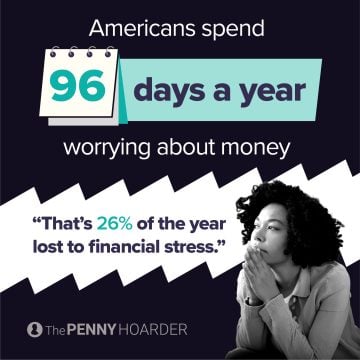
Americans spend the equivalent of 96 days a year worried about money, according to The Penny Hoarder’s 2026 Financial Anxiety Barometer Report.
Amid persistent inflation and economic instability, Americans worry often about money, the survey of 1,000 U.S. adults conducted in April 2026 found. And their responses to financial stress show an alarming trend toward unhealthy or even unsafe behaviors, many of which could potentially hurt them financially in the long term.
Among the key findings:
- 43% of Americans say they worry about finances multiple times per week
- 20% say they lost sleep over money at least six times in the past 30 days
- Nearly 1 in 10 say they’re in a constant state of panic about covering basic essentials like food and rent
- Nearly 20% say they’ve delayed medical or dental care in the past three months because of financial constraints
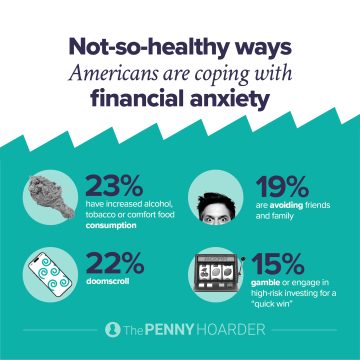
- 15% say they’re coping with financial stress by gambling or engaging in high-risk investing in hopes of a “quick win”
We’ll dig into the findings and offer some ways to cope if you’re experiencing financial anxiety, too.
Stress less about money. Sign up for The Penny Hoarder’s free newsletter today.
Financial Pressure
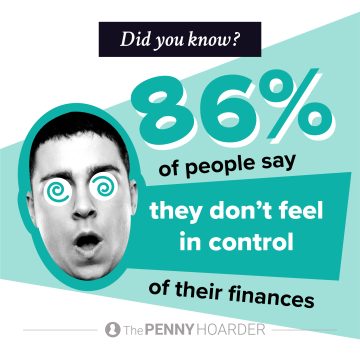
For most Americans, the financial pressure is on. According to our survey, only 14% feel in control of their finances. And it’s no wonder — after a period of hyperinflation during the COVID-19 pandemic, inflation had cooled. But it never settled down completely, and it continues to stay high. Add to that surging gas prices and a challenging job market, you’ve got a perfect storm for money worries.
According to our survey, 65% say the cost of essential living expenses is their biggest source of financial anxiety. Credit card debt (23%) and lack of emergency savings (23%) are tied for the No. 2 and No. 3 stressors, respectively.
And for many, financial anxiety is a perpetual condition — nearly 1 in 10 are in a constant state of panic about covering basic essentials while 43% worry about finances several times a week — the equivalent of 96 days per year. Forty percent worry weekly or more. Meanwhile, 28% say: “I cover my bills, but I’m anxious I’ll never afford extras like vacations.”
Lifestyle Tradeoffs
Financial experts often advise pulling back on discretionary spending when people are having trouble making ends meet. And consumers are willing to do it — 37% delay purchases to save money.
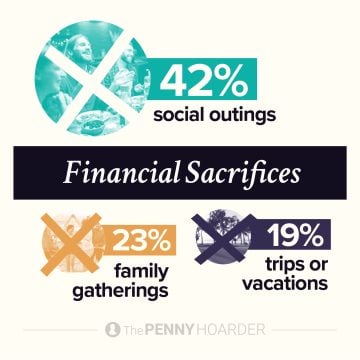
However, letting go of fun experiences and purchases can have negative mental and social effects. In order to keep up with bills, our survey respondents said they’ve skipped social outings (42%), didn’t go to major social events or family gatherings (23%), and canceled a trip or vacation in the last year (19%).
However, these kinds of trade offs often go beyond a missed cruise or not having beers with friends. Some can have lasting financial consequences.
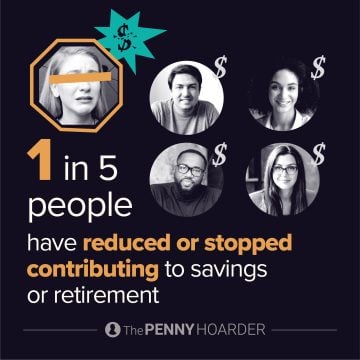
For example, 20% of respondents say they have reduced or stopped contributing to retirement this year, which can significantly set back progress if you’re trying to build a nest egg. Plus, more than 10% have used Buy Now, Pay Later for essentials like groceries. The more consumers rely on BNPL for everyday purchases, the higher the risk of winding up in a debt spiral.
Work & Income Impact
Income instability can play a big part in Americans’ financial anxiety, our survey found.
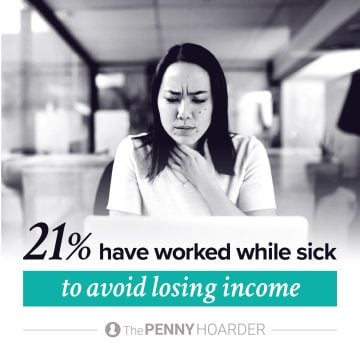
Nearly one in five worry frequently about layoffs in a job market that’s cooled significantly since the post-pandemic hiring heyday. Now, the tide has turned, leaving employees feeling more vulnerable. That may be why 21% say they’ve worked while sick or injured to avoid lost income.
Financial anxiety is also playing out in ways that affect Americans who are employed, with 15% saying financial stress is hurting their workplace productivity.
And as a result of their anxiety over finances, 18% of survey respondents say they’re considering a job change for higher pay, and 34% have looked for a side hustle or second job in the past six months. That’s similar to what we found in our Side Hustle report in March, when we found that 53% of Americans with side hustles would struggle to cover essential bills without them.
Health Impact
The financial reality is affecting more than our wallets — it’s affecting our health.
Loss of sleep is among the top reported side effects of financial stress, according to our survey results. Americans lose an average of three nights of sleep per month. And 9% lose 10 or more nights of sleep per month. Meanwhile, 50% of Americans say headaches are their top physical symptom of financial stress, 46% say it’s fatigue and 41% say it’s anxiety.
Financial stress is creating a negative ripple effect in other aspects of our health, survey results showed. Preventive care is taking a hit while unhealthy habits are starting to creep in.
- 19% of our respondents have delayed medical or dental care this year because of finances
- 23% have increased alcohol, tobacco or comfort food consumption
- 22% report more doomscrolling or “lifestyle envy” scrolling
- 19% avoid friends and social interactions due to financial stress
Relationships & Money
Financial stress and relationships often don’t mix, according to our survey’s respondents. Although only 8% of them say financial stress caused the demise of a relationship, one in three say it leads to arguments with their significant other. That means a third of Americans are experiencing a strain on their romantic relationships because of their financial situation.
This shows up in more ways than just disagreements about money. In fact, 10% say they have hidden a purchase or debt from their significant other — also known as “financial infidelity.”
How Americans Cope
To cope with financial anxiety, Americans are deploying multiple strategies. Among the most common healthy coping mechanisms: earning extra income, participating in hobbies, exercising, and talking to friends or family.
On the flip side, 15% are gambling or engaging in high-risk investing for a “quick win” and 14% are doing some retail therapy. Meanwhile, nearly one in four don’t have a strategy for managing financial stress at all.
Future Outlook
The good news is, more respondents say they feel like their financial anxiety is easing (40%) vs. getting worse (36%). Plus, nearly half feel at least slightly confident they’ll eventually reach their primary financial goal.
However, many are still feeling apprehensive.
- Only 26% feel highly confident about their financial future
- Only 14% feel in control of their finances
Tips for Moving Forward
The fluctuating cost of gas, groceries, rent and other essentials makes it tough for Americans to feel like they have a solid financial foundation. Even with this strain, finding ways to save more money is key to getting ahead of this unpredictability. The more money consumers save, the more prepared they’ll feel for unexpected expenses or an economic downturn. We have simple steps anyone can start to save more money and reach their financial goals.
Here are other ways to prevent financial anxiety from holding you back:
- Need extra income? Here are the best side hustles for earning extra cash.
- Worried about how to cover the cost of living? Check out these ways to beat inflation.
- Experiencing job instability? What to do if you’ve been laid off.
- Need healthy ways to deal with anxiety? How to cope with financial stress.
The Penny Hoarder Senior Managing Editor Tiffany Wendeln Connors, Managing Editor Katie Sartoris and Senior Editor of Freelance Mackenzie Raetz are Certified Educators in Personal Finance.
Methodology
The Penny Hoarder surveyed 1,000 U.S. adults in April 2026 using Pollfish, a mobile survey platform. Respondents opted in to participate and were informed the survey included questions related to financial anxiety and mental health. All participants provided consent. Results were post-stratified to align with the U.S. adult population by age, gender, region, and income.
Full survey results are available here: