Our Step-by-Step Guide to Filling Out FAFSA Makes it Mostly Painless
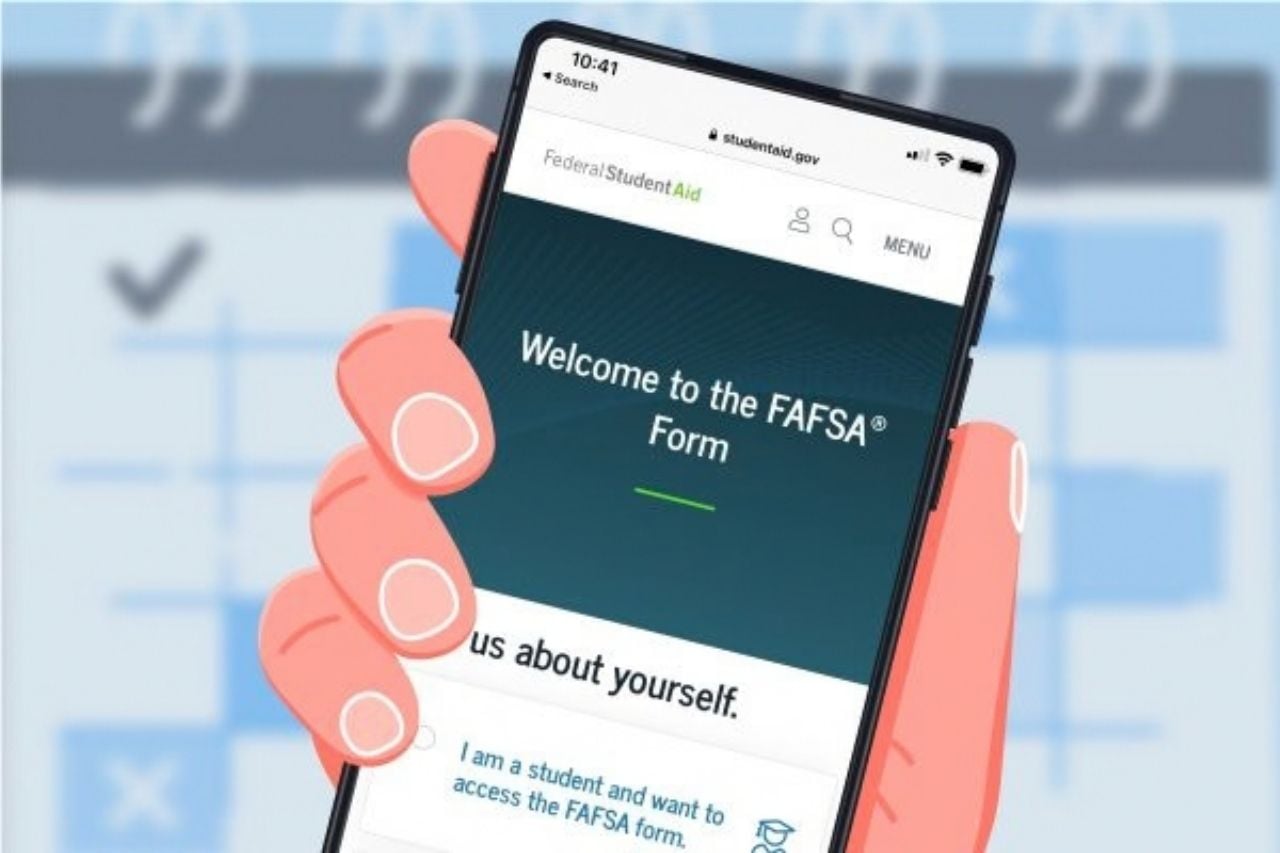

Filling out the Free Application for Federal Student Aid, better known as the FAFSA, is a rite of passage for most prospective or current college students, whether they’re attending a trade school near home or heading across the country to work on a PhD.
And that financial aid is important: The average cost of college per student, per year is $39,406, according to the Education Data Initiative. And 15 schools now estimate cost of attendance to be more than $100,000 per year, according to The Princeton Review.
Some good news in an increasingly expensive educational landscape: Recent major changes to the FAFSA have simplified the process of applying for aid. That means it’s easier than ever to get the financial assistance students need.
The FAFSA form for the 2027-28 school year became available Sept. 23, a week earlier than its scheduled release date of Oct. 1. Deadlines vary by state, but it’s best to turn the form in as quickly as possible. Early applicants have better chances for more federal financial aid.
But don’t fret: It’s still not too late to submit your FAFSA even for the 2026-27 school year; the deadline for that is June 30, 2027.
The new form is now much easier to fill out. If you file your federal taxes electronically, you can allow the Department of Education to retrieve your tax data from the IRS automatically. Students can now invite a contributor (usually a parent or spouse) via email or text message.
The Department of Education stated in a press release that this year’s streamlined form can be completed in as little as 15 minutes. My college-bound daughter and I filled each of our portions of the FAFSA in about 45 minutes by gathering our necessary documents ahead of time.
And that’s why we’re here. Behold: Your ultimate guide to filling out the FAFSA form. We’ll cover what exactly the FAFSA is, why everyone seeking higher education should fill it out, how to complete the application itself and tips to get through the paperwork quickly.
Save more. Stress less. Sign up for The Penny Hoarder’s free newsletter today.
What Is the FAFSA and Why Should I Fill it Out?
The Free Application for Federal Student Aid (FAFSA) is a form administered by the U.S. Department of Education’s Office for Federal Student Aid. Current and prospective college students can submit the FAFSA form to determine what federal aid — in the form of grants, scholarships, federal loans or work-study jobs — is available to them each academic year.
Colleges and universities frequently use data from the FAFSA to determine eligibility for their own scholarships and student assistance programs, too. What that effectively means is that the FAFSA isn’t only for need-based or federal aid, so you should complete the FAFSA annually — even if you think your parents make too much money.
Key FAFSA Deadlines and Dates
Tracking FAFSA deadlines can be difficult because the application window for a single school year lasts nearly two years. That means, at a given time, there could be two school years for which you can apply for aid:
- The FAFSA form for the 2026-27 school year became available Sept. 24, 2025, and is due June 30, 2027.
- The FAFSA form for the 2027-28 school year became available Sept. 23, 2026, and is due June 30, 2028.
However, funds are awarded on a first-come, first-served basis — and state deadlines and college deadlines are typically much earlier, often the spring before the school year begins (i.e., more than a year before the federal deadline) — so it’s in your best interest to complete the FAFSA as soon as possible.
To submit an accurate FAFSA for the next academic year before tax season, the format now allows you to use the previous year’s tax data. So for the 2027-28 school year, you use your 2025 tax return.
During the application process, you’ll be asked to consent to the Department of Education retrieving your tax return information automatically from the IRS to help complete the FAFSA form. Even if you didn’t file a tax return in 2025, you still must give your approval or you won’t be eligible for federal student aid.
One limitation: Since you’re using older tax data to fill out your financial aid form, there’s a chance your family’s financial situation could have changed since you filed your taxes. If that’s the case, contact your school’s financial aid office to discuss options. You’ll still need to fill out your FAFSA form using the data you already reported.
For Freshman Students Starting in the Summer
If you’re applying for financial aid as a freshman and plan to start college the summer after you graduate (so summer 2027), you may need to fill out both the previous year’s FAFSA (2026-27) and this year’s FAFSA (2027-28). That’s because the FAFSA covers the academic year beginning July 1. However, your school may have specific guidelines for first-time students entering school during the summer, so check with the school’s financial aid office to find out if they need both FAFSAs.
A Note on Student Loan Forgiveness
Student loan forgiveness has changed dramatically over the past few tumultuous years.
The Joe Biden administration’s SAVE (Saving on a Valuable Education) forgiveness program was struck down by the courts, and the Donald Trump administration’s One Big Beautiful Bill overhauled the IDR system beginning this year. So the number of student loan repayment options — and eventual forgiveness of student loans — has been reduced to two options: the Tiered Standard repayment plan and the Repayment Assistance Plan, which discharges remaining loan balances after 30 years of qualifying payments. Other forgiveness programs (like PSLF) also still exist, which we cover in strategies to help pay off your student loans.
However, one of the best ways to avoid debt altogether is to look for funding options outside of student loans, including grants and scholarships. For many of these “free” money options, you need to fill out the FAFSA.

Preparing to Fill Out the FAFSA Form
Getting your financial aid squared away might seem like a lot, but we’ve broken down each step so it’s as manageable and non-threatening as possible. Here’s what you should familiarize yourself with before filling out the FAFSA form.
1. Find Your State’s Deadline
When is the FAFSA due? While the federal deadline for submitting your 2027-28 FAFSA is June 30, 2028, states have their own aid deadlines. Check the deadline for your state of residence and note any special rules for award programs.
2. Sign Up for Your StudentAid.gov Account
If this is your first time filling out a FAFSA form, you’ll need to sign up for a StudentAid.gov account (formerly known as your FSA ID). Both the student and all contributors, typically your parents or spouse, must have their own account. A StudentAid account allows you to log into the federal student aid website, apply for aid, save your progress and sign your FAFSA form electronically.
Note: If the student’s parents are married and file a joint tax return, only one parent needs a StudentAid account. Otherwise, you can use the Federal Student Aid site’s tool to determine who needs to be a contributor.
You’ll need the following to sign up for the account:
- Full name (exactly as it appears on your Social Security card if you have one)
- Date of birth
- Social Security number
- Email address and phone number
Students must have a Social Security number, but contributors without one may check the box “I don’t have a Social Security number” when they’re creating an account.
Don’t toss your FSA ID login info aside once you complete the process this year; you’ll log in next year to autofill your previous year’s data and prompt you through the renewal process.
2. Gather Your Documents and Materials
This is not a time to leisurely go through the process of applying for aid — it will make the process a lot longer. Gather your materials before you log in to avoid that stress. You and your contributors should each have this info handy:
- Your StudentAid.gov account login and password
- Full legal name, date of birth, email address, phone number and mailing address
- Social Security numbers. Note: If you’re a dependent student and your parents do not have Social Security numbers, you can still fill out the form, checking a box saying that your parent doesn’t have a Social Security number. They’ll have to enter their financial info manually.
- If you aren’t a U.S. citizen, then use your Alien Registration Number.
- A copy of last year’s tax return and W-2s. Your tax information is transferred from the IRS, but you should have these documents readily available for questions.
- Any untaxed income, like child support.
- Your current total balances of cash, savings and checking accounts. Don’t include student aid.
- Your current net worth of investments, stocks, bonds and real estate (excluding your primary residence). If the parents own a 529 account for student, they’ll report it here as a contributor. Balances in 401(k)s, IRAs, Roth IRAs, pension, annuities and health saving accounts do not need to be reported as assets on the FAFSA.
- Business or income-producing farm net worth.
- The names of the schools you’ve applied to or plan to apply to. It’s easy to search for these schools within the online system, but you’ll want to have a shortlist of names ready. You can list up to 20 schools; if you’re applying to more than 20, you’ll have to add the extras after you submit your initial form.
3. Brace Yourself With the Federal Student Aid Estimator Tool
Use the Federal Student Aid Estimator tool to get an early estimate of your federal financial aid. The calculator doesn’t reflect your actual aid eligibility — you have to go through the full process for that — but you’ll answer the same types of questions as you will when you sit down to fill out the real deal.
If you or your parents are unfamiliar with the FAFSA, this is an easy way to get your feet wet without being afraid you’ll mess something up. The process takes about 10 minutes to complete, and you’ll need your basic tax and income information to get the best estimation.
4. First Timers, Do the FAFSA Prototype
If this is your first FAFSA rodeo, the FAFSA prototype gives you a preview of the questions you’ll need to answer when you fill out the online form.
We recommend keeping a sheet of paper with you while you fill it out, taking notes on what information you’re providing (like your total savings and total assets). Then, have it handy when you complete your online application to help you navigate any tricky questions.
Completing — or at least previewing — this form can help you determine exactly what documentation you’ll be expected to provide for yourself, your spouse or your parents.
6. Set Expectations About Your Student Aid Index
Once the student and any contributors submit their forms, you’ll see a number called the Student Aid Index (SAI), which replaced the Expected Family Contribution starting with the 2024-25 academic year.
The SAI is a formula used to estimate a family’s ability to pay for college and determine need-based aid.
When you see the SAI number, remember that along with Pell Grants, work-study jobs and federal student loans, you may be eligible for merit awards or other scholarships to help you pay the remaining portion. SAI is not a definitive number of what you will owe. We repeat: Do not panic.
How to Fill Out the FAFSA Form, Step by Step
If you’ve completed the preparation steps above, the FAFSA form itself will be fairly easy. Still, it’s good to know what to expect. Here, we’ll break down the FAFSA application form itself — and, hopefully, you’ll find that it’s not so intimidating after all.

Overview of FAFSA Steps for 2027-28 School Year: Student
Because the FAFSA is dramatically simplified, the steps to fill it out are much less involved, though you and your parents will still have to enter in some information. The Federal Student Aid site recommends students fill out their portion first. Here’s a simple breakdown of the steps for students:
- Log in to your account using your StudentAid account.
- Choose “Start New FAFSA” and select that you are the student.
- Review your identifying information, including your name, birthday and mailing address.
- Choose your state of residence, including the date you became a resident (your birthday if you were born there).
- Click “Approve” to give your consent for the Department of Education to retrieve your federal tax information from the IRS. This info automatically populates the FAFSA form to determine your eligibility for federal student aid.
- Answer demographic information, including marital status, what year you’ll be in college when you start the 2027-28 school year (e.g. freshman) and questions to determine dependency status.
- Answer any additional questions the Department of Education has about your tax return (it’d be unusual circumstances to answer anything other than $0).
- List your (the student’s) current total cash, savings and checking accounts.
- List your (the student’s) current net worth of assets, including investments and real estate (but not the home the student lives in).
- Enter the net worth of your (the student’s) businesses and income-producing farms.
- List the colleges and/or careers schools you are applying to (up to 20 schools). Note: Each time you add a school, you’ll only see the most recently added institution at the bottom, but you can review your list by clicking to see the full list.
- Invite a contributor, usually your parent or spouse. You’ll enter their email address and then get the option to copy the link and send via a text.
- Review your answers, view the Terms & Conditions, then sign and submit the form.
Overview of FAFSA Steps for 2027-28 School Year: Contributor
Here’s a simple breakdown of the steps for contributors:
- Accept the invitation the student sent to you.
- Log in to your account using your StudentAid account. Enter the invitation code your student sent.
- Review your identifying information, including your name, birthday and mailing address.
- Click “Approve” to give your consent for the Department of Education to retrieve your federal tax information from the IRS. This info automatically populates the FAFSA form to determine your eligibility for federal student aid.
- Answer demographic information, including marital status, state of residency and any unusual circumstances, like the student being an orphan or homeless.
- Answer questions about child support and federal benefits received and whether you filed a tax return.
- List your (the contributor’s) current total cash, savings and checking accounts.
- List your (the contributor’s) current net worth of assets, including investments and real estate (but not the home the student lives in).
- Enter the net worth of your (the contributor’s) businesses and income-producing farms.
- Review your answers, view the Terms & Conditions, then sign and submit the form.
Note: Federal law exempts three groups from reporting assets:
- If you have assets under $60K and file a simple tax return
- You claim federal benefits
- Your student qualifies for the maximum Pell Grant
If you’re in one of these groups, the FAFSA may never ask about your savings, 529 plans or investments — you didn’t miss a page.
After You Submit Your FAFSA Form
Congratulations! You did it.
Typically within an hour or up to a couple days, you’ll receive a Student Aid Report (SAR) that summarizes your FAFSA data and confirms you’ve completed your application correctly. You can log into your account to check on your progress (and confirm that all participants completed their parts). You’ll also see your SAI. Remember, this is just an estimate.
You’ll also be able to review your Student Aid Report for any mistakes and correct them online through your FSA account.
When the colleges you’ve applied to send your acceptance notices (fingers crossed!), you’ll also get a financial aid award letter, either in the same package/email or a few days afterward. Your school of choice may have additional questions about your FAFSA responses, but in that case, the financial aid office will contact you directly.
Some schools may ask you to independently verify some of the information you provided on your FAFSA, so it’s a good idea to keep the documents you used to answer the FAFSA questions handy.
Fill Out the FAFSA Fast With These Tips
Here’s how to cut down on the time it takes to fill out the FAFSA.
- Get your documents ready. To complete the FAFSA, you will need to reference tax forms, savings and investment information, addresses, emails and Social Security numbers (yours, your spouse’s and/or your parents’). Remind your parents to compile all their paperwork and important financial information. Gathering these documents will be the most time-consuming part. You don’t need to wait until the FAFSA form is released to do so. If you have them in order early, you can easily have your FAFSA completed the day it’s released.
- Decide on your schools early. The FAFSA requires you to list at least one school that you want to attend and request financial aid for. Given that, it’s important you have in mind your top schools before you sit down to complete the FAFSA. To speed up this process even further, you can collect the schools’ institutional codes beforehand as well, so that you don’t have to input the addresses of several colleges.
- Get your family to create their StudentAid accounts before filling out the FAFSA. Assuming you and your parents meet the requirements (in short, you all have Social Security numbers), creating separate accounts for everyone involved as soon as you can is essential. Having an the account allows you to complete the FAFSA form online and electronically sign it. Once it’s signed and sent, the Federal Student Aid office can begin reviewing it immediately.
- Plan a date and time to complete the FAFSA that works for you and your family. It’s likely either your parents or your spouse will be involved in the FAFSA form process. To ensure everything is submitted in a correct and timely fashion, it’s best if you can wrangle everyone in the same room (or video call!). That way, you can all work on the relevant sections at the same time and tackle any questions as they come up. (Pizza is optional but highly encouraged.)
If you’re properly prepared and take these steps, you should be able to knock out the entire FAFSA process in less than an hour.
FAQ
Here are the answers to your frequently asked questions about the FAFSA.
Any current and prospective college students should complete the FAFSA, even if they don’t think they’ll qualify. Many colleges use the information from the FAFSA to determine eligibility for merit-based scholarships and other financial aid. Currently enrolled college students should fill out the FAFSA each year to account for any changes in income, dependency or marital status. After you complete the FAFSA form the first time, it becomes much easier to do so subsequently.
The FAFSA became available on Sept. 23, 2026, for the 2027-28 academic school year. The federal deadline to submit the FAFSA for that academic year is June 30, 2028. However, many states set their own deadlines, which could be much sooner. And federal aid is earmarked on a first-come-first-served basis. So applying earlier is always better.
The FAFSA form for the 2026-27 school year became available on Sept. 24, 2025, with a federal deadline of June 30, 2027.
If you are well prepared with the information requested on the FAFSA form, it can take as little as 15 minutes to complete and submit. There are several key things you can do before you sit down to fill out the form itself. These steps — like gathering your demographic, tax and income documentation early — will drastically cut down on the time it takes to complete the FAFSA.
You can download a FAFSA PDF, print it, fill it out and mail it to the address on the form for processing.
Tiffany Wendeln Connors is senior managing editor at The Penny Hoarder and a Certified Educator in Personal Finance. Former Penny Hoarder staff writer Adam Hardy and current freelance writer Timothy Moore contributed to this report.