Side Hustle Statistics 2026: Income, Inflation and Why 53% Rely on Extra Work

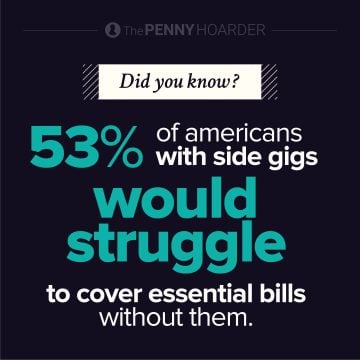
Side hustles are no longer optional for many of us. In fact, 53% of Americans with side hustles say they’d struggle to cover essential expenses without the extra income.
In The Penny Hoarder’s 2026 survey, we dove into the side hustle culture and discovered most are just trying to keep up with creeping inflation. Three in four survey respondents said rising costs have increased their reliance on earning extra income outside their regular job.
The survey asked 1,000 U.S. adults with side hustles about their earnings and hours worked, as well as burnout and financial security. Here are the most important side hustle statistics for 2026.
What Is a Side Hustle?
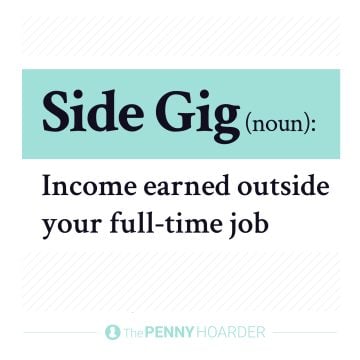
A side hustle is a way to earn income outside of a primary full-time job. For the purposes of our survey, we defined side hustles as gig work, freelancing, selling products, content creation or contract work.
Key Side Hustle Statistics for 2026
We learned much about the state of side hustles in our survey, but respondents made one thing very clear: For most, side hustles are necessary income. Here’s a look at some of the key insights we gleaned.
- 53% would struggle to cover essential expenses without side gigs
- They earn $1,275 from side hustles per month on average
- 44% have two side gigs
- 73% prioritize flexible schedules with side hustles
- 65% experience burnout
- 62% treat side gigs as financial backup
- 3 in 4 say inflation increased reliance on side hustles
Why Americans Start Side Hustles in 2026
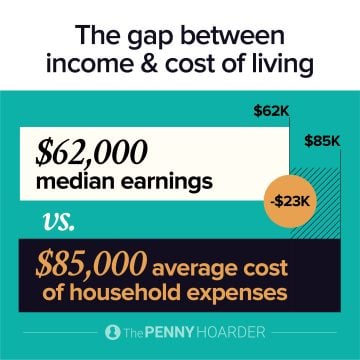
These days, there’s a gap between household costs and annual median earnings. In our State of Savings report, we found that household expenses can cost upwards of $85,000 a year, while median earnings for full-time and salary workers sit at just over $62,000 annually, according to the Bureau of Labor Statistics.
It should come as no surprise, then, that 29% of our survey respondents say the main reason they’re currently working a side hustle is to cover living expenses. Meanwhile, 21% say they’re side gigging to build emergency savings, and 12% do it to pay down debt.
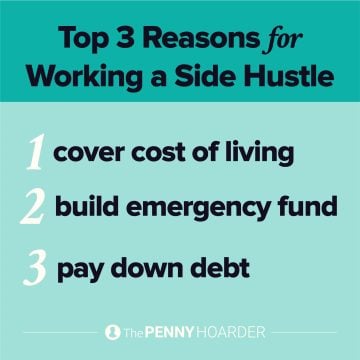
- 29% to cover cost of living
- 21% to build emergency savings
- 12% to pay down debt
Inflation and the Rise of the “Financial Backup” Hustle
Amid a creeping unemployment rate, 62% of survey respondents say they treat their side hustle as job-loss insurance. Americans have little cushion for a job loss, with only 37% of working Americans saying they keep a dedicated emergency fund at all, our State of Savings survey found.
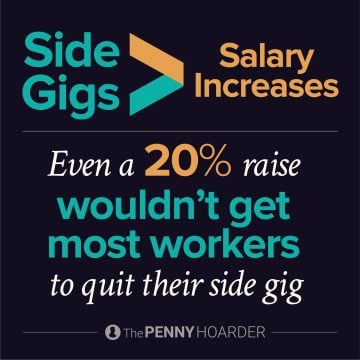
Even a sudden cash influx may not be enough to allay fears, as 40% of respondents said they wouldn’t quit their side hustle even if their primary employer gave them a 20% raise.
And with inflation slowly inching upward, American workers are scrambling to cover rising costs amid a shrinking job pool — the U.S. economy shed 92,000 jobs in February 2026, according to the Bureau of Labor Statistics’ jobs report.
More than 75% of survey respondents said they somewhat or strongly agreed that rising costs (inflation) have increased their reliance on side hustle income over the past 12 months. That data echoes our Tax-Time Reality Check survey, which found that 58% of tax filers said their financial situation hasn’t improved since last tax season.
How Many Side Hustles Do Americans Have?
Having multiple jobs is the norm for many workers. Among the Americans who do earn side income, the majority have more than one side hustle. In fact, 57% of the respondents to our survey said they have two or more side hustles.
Here’s how it breaks down:
- 43% have one
- 44% have two
- 9% have three
- 4% have four or more
On the one hand, this shows flexibility in how workers can earn. This can be a good thing if they have several side hustle options that fit into their schedules. On the other hand, it shows that one income is often not enough to help people reach their financial goals, and working multiple jobs can mean less free time and more stress (we’ll get to that in a bit).
How Much Do Side Hustles Pay in 2026?
According to our survey, the median monthly earnings from side gigs was $1,275 per month, or roughly $15,000 per year. For households who bring in the U.S. median annual income of about $62,000, a side hustle can add about 25% to their annual earnings.
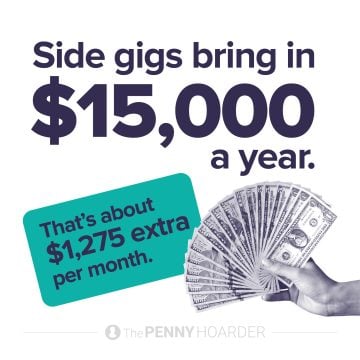
Earning that much outside of a regular, full-time job shows that these ventures are more than avenues for extra cash. They’re a way for the average worker to cover everyday expenses. Having higher-paying gigs and remote options can allow workers to increase their earnings.
How Much Time Do Americans Spend on Side Hustles?
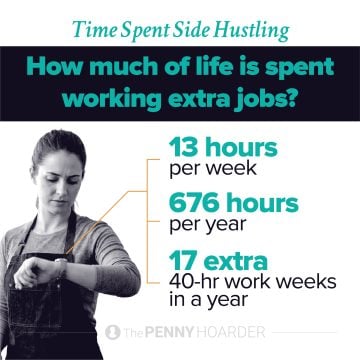
Our survey found that the average person with a side gig works an additional 13 hours per week. That looks like:
- 676 hours per year
- 17 extra 40-hour work weeks in a year
Over a lifetime, this adds up to more than a decade of additional full-time work. Although survey respondents spent an average of about 2.8 years with side gigs, a quarter of them have been putting in extra work for more than five years. This can be concerning when so many side hustlers are at a risk of burnout. Flexibility is the key to managing tighter schedules. Having a work-from-home full-time job can help, and so can maximizing any spare time for side hustles.
Most Popular Side Hustles in 2026
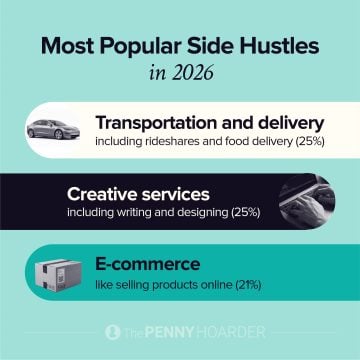
Ride share and delivery remain the most common side hustles, according to our survey.
The breakdown of the most popular side hustle options is as follows:
- Transportation and delivery, including rideshares and food delivery (25%)
- Creative services, including writing and designing (25%)
- E-commerce, like selling products online (21%)
Burnout and Financial Stress Among Side Hustlers
A side gig is a good way to make extra money, but it comes with trade-offs. As with any job, you’ll have less free time and in some cases, more stress.
Burnout, a state of exhaustion often stemming from work or other overwhelming responsibilities, is a significant issue among side hustlers. Sixty-five percent of our survey respondents report experiencing burnout at least sometimes. Just one in 10 never experience burnout.
But only 44% of our respondents feel at least “somewhat” financially secure, underscoring the reality for many Americans. According to our State of Savings survey, 58% of working Americans are living paycheck-to-paycheck.
Taxes and Profitability
Taxes add an extra layer of complexity if you’re earning side income. Workers with a side gig are most likely considered independent contractors, so companies don’t withhold any taxes from their checks. That makes the worker responsible for paying them through quarterly payments. Even a side gig not associated with a company, such as selling your stuff online, could earn you enough money to trigger taxes.
Not every worker is prepared for this aspect of having a side hustle. In fact, 1 in 5 survey respondents said they haven’t set aside money for taxes or aren’t sure what they owe, and only 43% set aside money and pay at annual filing. Depending on your side hustle, there may be rules in regards to your tax obligation. It’s important to ask a tax professional about your specific situation.
The Future of Side Hustles in America
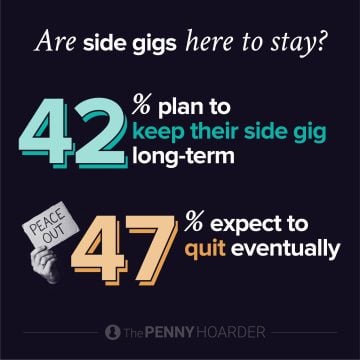
Our survey respondents were fairly evenly split about whether they plan to keep hustling long term:
- 42% plan to continue long-term
- 47% expect to quit eventually
For some, side hustle can offer a temporary cash influx or a way to reach a specific financial goal, like buying a car or house. For others, a side hustle is a permanent arrangement, whether by choice or by need. If you’re looking for a side hustle, think about your goals when considering your options. Do you want to bring in a little extra cash, like a short-term gig for teachers on summer break? Or are you seeking a long-term job with a company that hires remote workers?
How to Find a Side Hustle That Works for You
When it comes to side hustles, you have a lot of options. We’ve reported extensively on side jobs and have found remote side hustles, the best second jobs, high-paying part-time jobs, summer jobs for teachers, ways to earn extra money before retirement and more.
No matter what kind of side jobs Americans are doing, 73% of our survey respondents say flexibility is most important. Another 39% say high earning potential is the top priority when considering a side hustle while 39% say personal fulfillment is most crucial.
When deciding what kind of side job to work, here are some things to consider:
- The job’s flexibility: Can you swing this job between your other commitments?
- Your availability: Realistically, how much time do you have to do this job? It’s important to consider downtime to de-stress, too.
- Impact on primary job: Is there a conflict of interest or policy violations with your main gig?
- Pay: Is the pay worth the effort?
- Your skills: Does this job leverage my experience?
- Time commitment: Is this a temporary job? Or one that you can do indefinitely?
Knowing what you need and want with a side hustle can help you make the best choice for your finances and your lifestyle.
Methodology
The Penny Hoarder surveyed 1,000 U.S. adults in February 2026 using Pollfish, a mobile survey platform. Respondents were screened to ensure they currently earn income from an active side hustle. Survey responses were post-stratified to better reflect the U.S. adult population based on age, gender, region, and income.Additional stat (extrapolated): 8.6 million Americans say they hold multiple jobs, according to the BLS. So we can say: 4.6 million (8.6 M x 53%) American workers say they couldn’t cover essential expenses without their side hustle.