9 Cheap Ways to Block Your Neighbor’s View into Your Yard

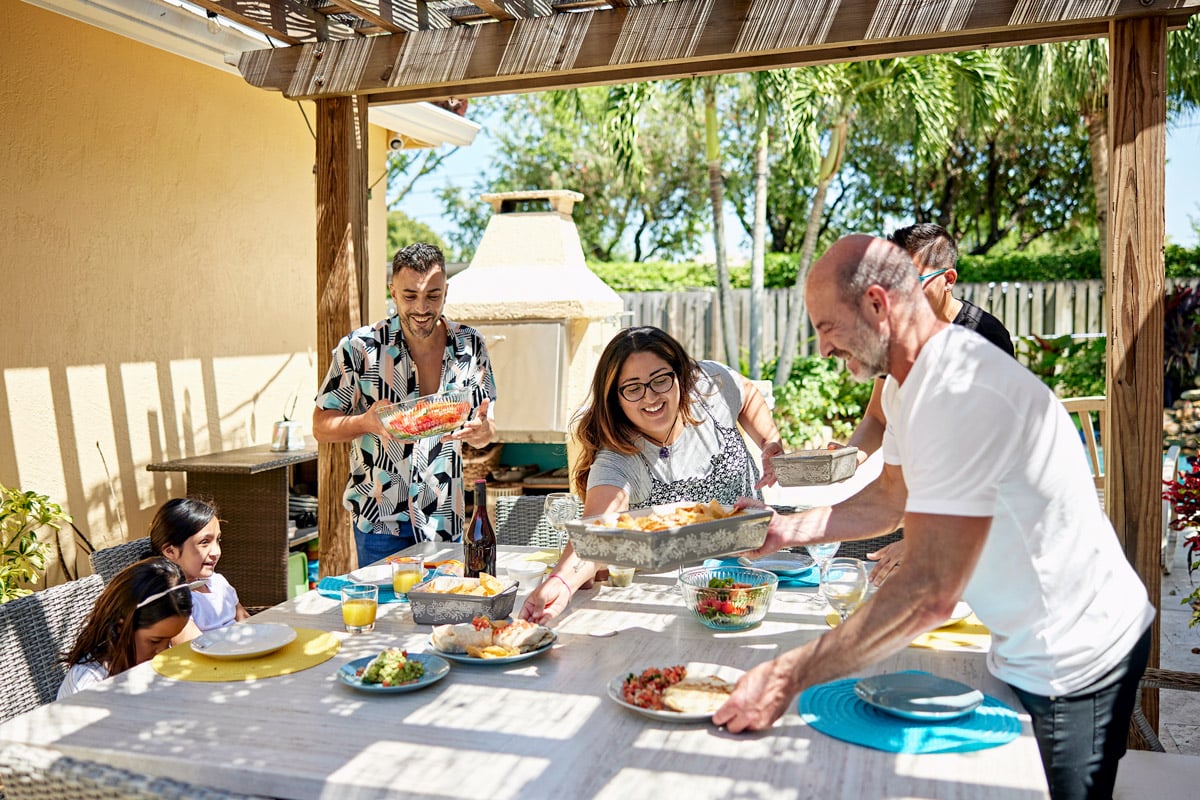

Good fences make good neighbors, they say. But fencing isn’t the only way to shield your outdoor space from peeping toms and passersby.
You can create privacy in your yard on a budget — especially if you get creative.
Fences are usually the first privacy solution people consider to block a neighbor’s view. But fences can be incredibly expensive.
It can cost thousands of dollars to install a traditional fence or stone wall around your property, not to mention labor and installation costs.
In this guide, we cover some cheap ways to block your neighbor’s view. This includes curtains, bamboo shades on a porch or a simple lattice fence with fast growing vines in the garden.
Make money easier. Sign up for The Penny Hoarder’s newsletter today.

9 Cheap Ways to Block Your Neighbor’s View
You can block your neighbor’s view of an outdoor living space without breaking the bank. But there’s a few things to consider first.
Make sure you’re familiar with the rules of your homeowner’s association and your city’s building codes before starting an outdoor project.
You want to comply with any fence height, outbuilding size and property line setback restrictions.
Also keep in mind that some budget-friendly backyard privacy solutions are faster and easier to construct than others.
Fast-growing shrubs and tall trees, for example, may still take three to five years to grow large enough to block your neighbors’ view.
That’s why it’s helpful to identify the part of your yard where privacy is most needed — usually a porch, pool or sitting area. Start there and add other privacy layers over time to keep costs low.
Make Quick Money to Help Block Your Neighbor's View
Need some extra cash to fund these cheap ways to block your neighbor’s view? We’ve got some ideas for you. From trying out apps to sharing your honest opinion, these are some of our favorite ways to make quick money.
| Offer | What You Can Earn | What You Have to Do | Take Action |
|---|---|---|---|
| InboxDollars | $225/month | Complete short surveys | |
| FreeCash | $1,000/month | Simple online tasks | |
| Branded Surveys | $600+/month | Share your honest opinion | |
| Solitaire Cash | Up to $83 per win | Compete against other players | |
| Kashkick | $1,000/month | Try out apps |
1. Rolls of Bamboo Screening and Privacy Deck Screeners
Defined areas in the yard, such as small patios and decks, are usually easier to screen than an entire yard.
By adding a simple screen, partition or sun shade, you can simulate an intimate indoor environment with complete privacy.
One inexpensive option is adding rolls of reed or bamboo screening, which you can find on Amazon or home improvement stores, like Lowe’s.
If you already have a screened-in porch, these panels can be easily hung inside the enclosure to completely block out light and the peering eyes of neighbors.
Outdoor privacy deck screens are another option.
An outdoor privacy screen or partition is a freestanding or integrated fixture that can shield your patio, deck or balcony from the view of others. They come in a variety of materials and sizes.

2. Curtain Panels
Outdoor curtain panels are another cheap way to block your neighbor’s view by screening a porch or deck.
If you live in a temperate or dry climate, you can repurpose indoor curtains or make your own curtains from material you already have.
For wet and humid climates, it’s best to buy weather-resistant outdoor curtains to prevent mold and mildew during the rainy season.
Outdoor curtains are super easy to install if your patio, porch or pergola has wood columns or posts you can drill into.
Look for grommet or tab-top curtains with weighted hems. Outdoor curtains come in many fabrics, from heavy cotton-canvas blends to sheers.
You should hang outdoor curtains from a weather-resistant and rust-proof curtain rod, galvanized pipe or thin PVC pipe.
Alternatively, you can install lightweight curtains using a tension rod if you can’t drill into a structure to place brackets.
3. Lattice Panels With Fast Growing Vines
Lattice panels are another inexpensive way to interrupt sight lines without enshrouding your space in shadow.
Lattice screens also come in a variety of colors, materials and sizes to suit your needs.
For additional privacy, you can add fast-growing vines.
Simply place some vine-filled pots under the lattice fence and soon, the plants will grow and wrap themselves around the panels.
For minimal upkeep, look for perennial vines and climbing plants that will come back year after year, like trumpet vines, summer cascade wisteria, honeysuckle or climbing hydrangeas.
This cheap way to block a neighbor’s view is a great idea near a property line, too. It won’t completely obstruct your neighbor’s view like a corrugated metal fence or stone wall, but it adds some greenery while still obscuring sightlines.

4. Wooden Posts With Wire or Bamboo Fencing and Plants
This garden design solution is an affordable way to create privacy. It’s cheaper, faster and lighter than installing solid wooden fencing around your property.
You can also employ it to screen off a particular section, such as a backyard garden or raised plant beds.
You will need to buy at least two wooden fence posts and concrete. Dig holes for the posts and add concrete sand to hold them in place.
Next, unfurl a roll of wire or bamboo fencing and secure it at either end of the posts.
You can also add a patio table with an umbrella for some additional overhead shade and privacy.
Meanwhile, you can find panels of roll-up bamboo fencing on Wayfair and Home Depot.
To add greenery to your own backyard, plant vines around the structure. Many vining plants will quickly grow from a one- to two-gallon nursery pot to 6 feet high or more.
For shady spots, check out Angyo Star Fatshedera and English ivy. For full sun, Carolina jasmine, wisteria and climbing roses like Yellow Lady Banks are a great way to create a natural privacy screen.
You can also plant trees and tall plants like Italian cypress or clumping bamboo near the structure for added backyard privacy.

5. A Pergola, Arbor or Trellis With Recycled Materials
Building a pergola in your backyard isn’t a fast or easy way to add privacy and overhead shade.
But by using recycled or reclaimed wood — along with plenty of elbow grease — you can create a beautiful shade structure to obstruct a second-story window from peering into your private backyard for less than $100.
Janet Loughrey, a full-time garden photographer and writer whose work has appeared in Garden Design and Better Home and Gardens, suggests looking at Habitat for Humanity ReStores for discount lumber.
“It can be a little hit-or-miss, like going to a thrift store,” Loughrey said. “But it can also be a great way to get cheap materials, especially with the cost of lumber so high right now.”
You might also check Craigslist and Facebook Marketplace. Sometimes small builders or home renovation companies sell materials there at a steep discount. Some even list old lumber for free just to get rid of it.
You’ll need to be comfortable with power tools and construction to create a pergola from scratch. If you have a couple people who can help, you might be able to get the job done in a weekend.

If you’re not quite ready to tackle this big project, you can build a simple arbor instead to add privacy to a side yard.
Another option: Building a container garden or a planter box with a trellis. Or, you can buy one from places like Amazon and Home Depot.

6. Wooden Pallet Privacy Wall
Want to construct a privacy wall to block your neighbor’s view without breaking the bank?
Wooden pallet fences are an incredibly cheap way to block a neighbor’s view because you can often snag free pallets from grocery stores and big box stores.
“Many places throw out or discard pallets, so it’s a great way to add privacy without spending much money,” Loughrey said.
DIY-ers across the Internet have shared ingenious ways to use cheap wooden pallets to construct budget-friendly privacy fencing, including growing plants and vines between the slats.
Pallets are usually 40 inches by 48 inches, so measure out the space in your yard beforehand so you know how many pallets you need.
You can use long roofing nails or bolts to join pallets together into a privacy fence. You can add wooden posts to securely anchor the fence.
Add a container garden, potted plants, outdoor decor or evergreen shrubs near the privacy fence for an aesthetically appealing pop of color.
7. Tall Ornamental Grass
Ornamental grasses can provide moderate seclusion without impacting light and air circulation in your yard or garden.
You can plant a row of grasses like zebra grass, feather reed grass, pampas grass or fountain grass along your property line.
Ornamental grasses grow more quickly than shrubs and evergreen trees. Still, these tall grasses take at least two growing seasons to reach maturity, so they’re not a great idea for quick privacy. Also, they don’t grow as tall as a tree or hedge.
8. Fast Growing Trees to Create a Canopy
Planting tall trees between a property line and a patio is a great long-term way to add overhead privacy.
Loughrey suggests buying young trees from nurseries in the fall or at the end of season to get the best price.
Fast-growing trees that provide a great canopy for shade and seclusion include red maples, poplar trees and maple trees. Emerald Green Thuja is another option: This overachieving arborvitae can grow up to 5 feet per year.

9. More Permanent Plant Options
If you don’t plan on moving anytime soon, there are many permanent beautiful plants that give you cheap ways to block neighbor’s view.
Kip McConnell, a horticultural and plant expert with Southern Living Plant Collection, suggests creating a “living fence” on the cheap.
You can find small starter plants like the ones listed below at nurseries and home improvement stores. McConnell said to expect to pay around $25 to $35 for most three-gallon plants.
“It might take a few years for them to reach maturity, but at that price, it’s a fantastic return on investment,” McConnell said.

Screen Play Holly
This evergreen beauty offers glossy growth with deep red berries in early winter. Reaching up to 30 feet high by 10 feet wide, this holly tree grows well in full sun or partial shade and offers excellent privacy screening.
Forever Goldy Arborvitae
This vine delivers a classical look with bright golden foliage and an upright, pyramidal shape. It can grow 10 to 12 feet high, making it ideal for borders and hedges.
Vitex (Chaste Trees)
Vitex is a fast-growing shrub that can shoot up as much as 7 feet in a single season, though most homeowners choose to keep it around 10 to 20 feet tall. It is famous for its lovely lavender flowers, which attract butterflies, bees and other pollinating insects. McConnell recommends Summertime Blues Vitex for a soft, natural privacy screen.


Crape Myrtle
Crape myrtles are hardy shrubs and small trees long associated with gardening in the South.
Resistant to drought and heat, these deciduous plants grow to about 14 feet high — the perfect height to block a neighbor’s view. Their brilliant summer blooms come in many different colors, including magenta, lavender, pink, dark purple and white.
McConnell suggests the Miss Frances crape myrtle, which offers scarlet blooms and green leaves.
Viburnum
Viburnum are evergreen blooming shrubs that grow well planted in a group or as a hedge for privacy.
McConnell likes the Coppertop Sweet Viburnum. Its dark maroon new growth fades to copper, then olive over the season. It has a high heat and drought tolerance and can grow up to 10 feet tall by 5 feet wide.
Rachel Christian is a Certified Educator in Personal Finance and a contributor to The Penny Hoarder. She focuses on retirement, investing, credit and life insurance.