The Best Expense Tracking Apps of 2026: 8 Options Compared



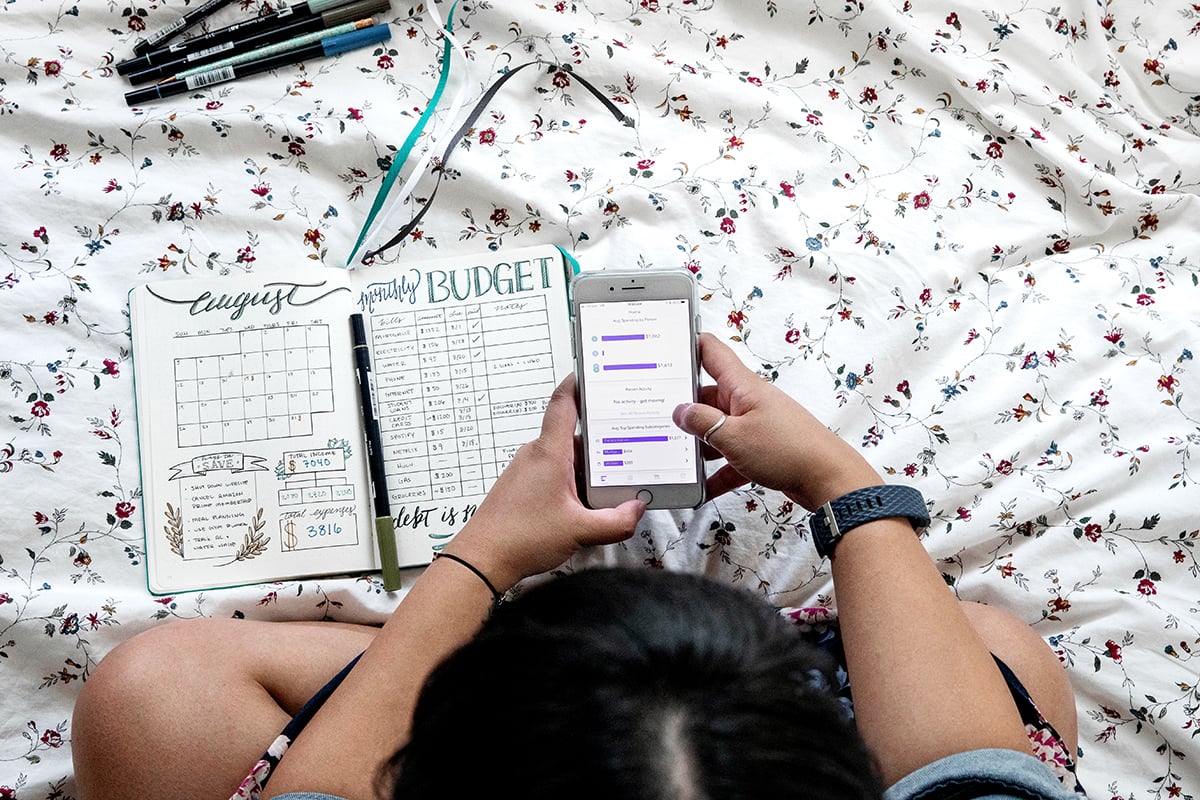
If you’ve ever made it to the end of the month with no clear idea where your paycheck went, we feel your pain. And it’s not one big, predictable expense, right? It’s likely an unexpected deal when you’re browsing online, an eye-popping trip to the gas pump or the occasional meal delivery (OK, maybe not so occasional) when you’re too tired to cook. All those little expenses start to add up.
An expense tracking app can be a simple fix. The good ones connect to your accounts, categorize transactions automatically and surface patterns you’d never spot on your own. Some go further and pair tracking with budgeting tools, debt payoff plans or net worth dashboards.
The landscape has shifted, though. Mint — the longtime free go-to — shut down in 2024, leaving millions of users hunting for a replacement. Other apps have raised prices, added paywalls or quietly disappeared.
Below, we compared eight expense tracking apps worth considering in 2026, including free picks, premium options and the most-recommended Mint replacement. Let’s get tracking.
About our methodology: We evaluate every app against a consistent set of criteria and then match the strongest performers to specific use cases, so you can find the app that best works for you. Read our full methodology here.
Best Expense Tracking Apps at a Glance
Here are the eight best expense tracking apps of 2026 at a glance — a quick comparison of what each app is built for, whether it has a free tier, and what the paid version costs.
| App name | Best for | Free tier? | Cost for paid version |
|---|---|---|---|
| Rocket Money | Overall free expense tracker | Yes | $7–$14/mo (pay what you choose) |
| YNAB | Zero-based budgeting | 34-day trial | $14.99/mo or $109/yr |
| Monarch Money | All-in-one financial dashboard | 7-day trial | Core: $14.99/mo or $99.99/yr |
| Empower | Free investment + expense tracker | Yes | Free; advisory fees for wealth management |
| Goodbudget | Free envelope-style tracker | Yes | $10/mo or $80/yr |
| Quicken Simplifi | New budgeters | No (30-day money-back) | $6.99/mo, billed annually |
| EveryDollar | Dave Ramsey fans | Yes (manual entry) | $17.99/mo or $79.99/yr |
| PocketGuard | Simple daily spending limit | 7-day trial with limited features | $12.99/mo or $74.99/yr |
Offers change; verify terms.
Rocket Money — Best Free Expense Tracker Overall
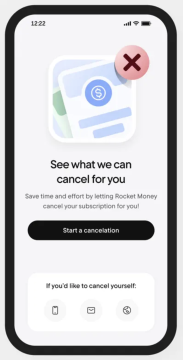
Rocket Money is the best free expense tracker for most people because it links to your accounts, categorizes spending automatically and surfaces recurring subscriptions you may have forgotten about — without forcing you into a paid plan.
After connecting your bank, credit card and loan accounts, Rocket Money sorts each transaction into a category and tracks spending against simple budgets you can adjust. With the free version, Rocket Money lets you know which subscriptions you have, but you have to cancel the unwanted ones yourself.
The standout feature of the premium version is that Rocket Money offers to cancel subscriptions with the click of a button. That can lead to immediate savings if you have a stack of subscriptions you’ve lost track of.
There’s another feature, bill negotiation, which is a standalone feature that you pay for separately and can use with either free or premium version. For this feature, you choose a bill (like your cable or internet bill), and Rocket Money will try to negotiate a lower price for you. Rocket Money charges a fee based on a percentage of the savings, but you only pay if Rocket Money successfully negotiates a lower bill.
The free tier covers the basics — account linking, transaction history, budgets and subscription tracking. Premium unlocks credit score monitoring, custom categories, advanced spending insights and the subscription cancellation feature. Rocket Money charges a pay-what-you-can model, generally from $7 to $14 per month, for its premium version.
Pros
- Free tier is genuinely useful
- Helpful subscription detection
- Clean, simple interface
Cons
- Bill negotiation takes a percentage of any savings
- Less customization than YNAB or Monarch
- Some users may want a more detailed budgeting tool
For more info, see our Rocket Money review.
YNAB — Best for Zero-Based Budgeting
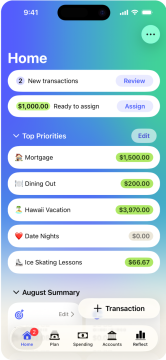
YNAB (You Need a Budget) is the best expense tracking app for users who want to assign every dollar a job, not just monitor where it ends up.
YNAB uses a method called zero-based budgeting: when income arrives, you allocate every dollar to a category — rent, groceries, savings goals — until you have $0 left to assign. The app then tracks every transaction against that plan in real time, so you always know what’s left to spend in each category.
YNAB costs $14.99 per month or $109 per year, with a 34-day free trial. There is no permanent free tier. The learning curve is steeper than most tracking apps, but YNAB publishes free workshops and a podcast that walk through the method.
Pros
- Powerful, methodical approach to assigning every dollar
- Real-time syncing between phone and desktop
- Strong educational content for new users
Cons
- Steep learning curve
- No free version
- May be overkill if you only want passive tracking
More details on this app is in our YNAB review.
Monarch Money — Best All-in-One Financial Dashboard
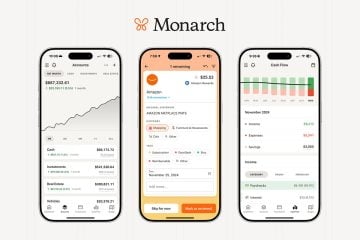
Monarch Money is the best all-in-one financial dashboard in 2026 and the most-recommended Mint replacement, combining spending, investments, net worth and budgets in one customizable view.
Monarch pulls transactions from bank accounts, credit cards, investment accounts and loans, then organizes everything into a dashboard you can tailor. You can build budgets by category, set savings goals, track your net worth over time and share access with a partner — a feature couples have specifically asked for since the Mint shutdown.
Monarch is subscription-only at $14.99 per month or $99.99 per year for its Core plan, with a seven-day free trial. Get 50% off your first year of the Core plan with the code MONARCHVIP. Monarch Plus, which includes a business mode and forecasting, costs $199.99/year.
Pros
- Comprehensive view of net worth, investments and spending
- Built for couples and shared finances
- Strong customization options
Cons
- No free tier
- Plus plan (helpful for freelancers) is pricey
- Investment tracking is solid but not as deep as dedicated brokerage tools
For a closer look, see our Monarch Money review.
Empower — Best Free Investment + Expense Tracker
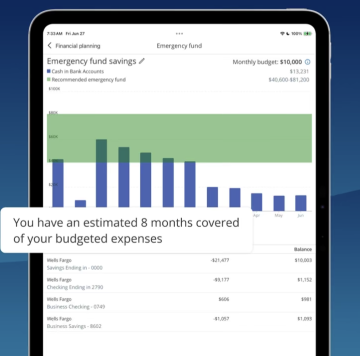
Empower (which merged with Personal Capital) offers a free expense tracking and net worth dashboard that pairs well with brokerage-level investment monitoring, making it the best free pick for users who watch both a budget and a portfolio.
Empower’s dashboard shows spending, debt, retirement projections and investment performance side by side. The investment tools — including a fee analyzer, asset allocation checker and retirement planner — are unusually robust for a free product. Spending tracking is more limited than Rocket Money or Monarch, but if your priority is “are my investments on track?” alongside “what did I spend this month?”, the combination is hard to match.
The dashboard is free. Empower also offers paid wealth management services for portfolios above a minimum threshold; those carry an advisory fee and are entirely separate from the free tools.
Pros
- Free dashboard is genuinely full-featured
- Strong investment and retirement planning tools
- Net worth tracking over time
Cons
- Spending categorization is less polished than competitors
- Free users may receive sales calls about wealth management
- Budgeting features are fairly basic
Our full Empower review covers the wealth management side in more detail.
Goodbudget — Best Free Envelope-Style Tracker
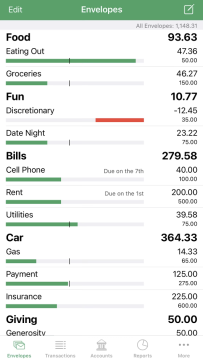
Goodbudget is the best free expense tracker for couples and anyone who prefers the cash envelope budgeting method, with manual entry that forces awareness of every transaction.
Goodbudget is built around the classic cash envelope system: you assign money to digital “envelopes” for groceries, gas, eating out and so on, then log each expense against its envelope. Unlike most modern trackers, Goodbudget does not automatically pull from your bank accounts — entries are manual. That extra friction is what many users prefer, because it forces you to notice what you spend.
The free tier includes 20 envelopes and syncs across two devices, which makes it a good app for couples. Goodbudget Plus expands to unlimited envelopes and up to five devices for $10 per month or $80 per year.
Pros
- Great for couples sharing one budget
- Manual entry builds spending awareness
- Free tier offers enough usable features if you don’t want to spend extra
Cons
- No automatic bank sync
- 20-envelope cap can feel limiting
- Visual design feels dated compared to competitors
Quicken Simplifi — Best for Beginners
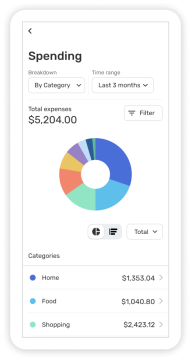
Quicken Simplifi is the best expense tracker for beginner budgeters, with auto-categorization and a built-in subscription tracker that flags everything charging your card on repeat.
Simplifi syncs with bank, credit, investment and loan accounts, then builds a spending plan around your fixed expenses. The standout feature is the recurring transaction tracker, which catches subscriptions you may have signed up for and forgotten about. Reports break down spending by category, payee or custom tag.
Simplifi costs $6.99 per month, billed annually, with a 30-day money-back guarantee. There is no permanent free tier, but it frequently offers a discounted price.
Pros
- Auto-categorization is good for beginner budgeters
- Lower price point than YNAB or Monarch
- Investment and net worth tracking included
Cons
- No permanent free version
- Less flexible than some
- Customer support has mixed reviews
EveryDollar — Best for Dave Ramsey Fans
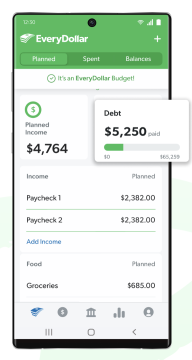
EveryDollar is the best expense tracker for fans of Dave Ramsey’s Baby Steps method, with a budgeting template that maps directly onto his debt-payoff and savings framework.
The free version requires manual transaction entry — you type each expense in as it happens or at the end of the day. The paid Premium tier ($17.99 monthly or $79.99 annually) adds automatic bank sync, transaction categorization, custom reports and the Baby Steps progress tracker that Ramsey followers tend to want.
Pros
- Clean, easy-to-use interface
- Baby Steps tracker for Ramsey followers
- Free tier exists, even if it's manual
Cons
- Free version is fully manual — no autosync
- Premium pricing is high for what's included
- Less flexible than YNAB or Monarch
Our EveryDollar review walks through the app’s features.
PocketGuard — Best for a Simple Daily Spending Number
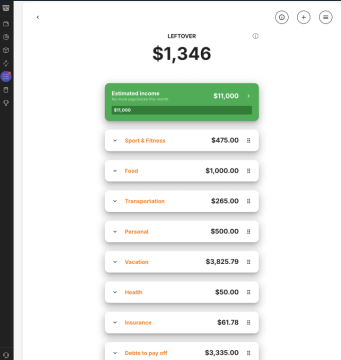
PocketGuard is built around one simple idea: it shows how much you can safely spend today after bills, goals and necessities are covered — making it the best pick for users who want one number, not a full budget system.
The signature “In My Pocket” feature subtracts your bills, savings goals and essential spending from your income to produce a single safe-to-spend figure. PocketGuard also flags recurring subscriptions and offers a debt payoff plan.
What it calls a “free tier” is really just its seven-day free trial, which is limited to two linked accounts and two budget categories. PocketGuard Premium is $12.99 per month or $74.99 per year; the site states some customers get a lifetime option offer, which we’ve seen at $149.99.
For more details, read our full PocketGuard review.
How to Choose an Expense Tracking App

The right expense tracking app depends on a few simple questions about how you want to manage money — not on which app has the most features.
Ask yourself:
- Do you want automatic tracking or manual entry? Automatic apps (Rocket Money, Monarch, Empower, Simplifi) connect to your accounts and sort transactions for you. Manual apps (Goodbudget, EveryDollar) make you log each expense, which can build awareness if you’re starting from zero but can also be a chore to maintain.
- Free or paid? A free tier is typically fine for getting to know the app, but paid tiers typically add more automation, customization and goal tracking. Depending on the app, a paid version may pay for itself in the amount it saves you by canceling unwanted subscriptions.
- Tracking expenses only or full budgeting? If you want to know where money went, a tracker is enough. If you want to assign every dollar a job in advance, a budgeting app like YNAB may be the right fit.
- Investment tracking? Empower and Monarch include net worth and investment dashboards. Pure tracking apps don’t.
- One person or two? Monarch and Goodbudget are designed for shared budgets.
There is no single “best for everyone,” so try to find the one that best matches your needs. By taking advantage of free trials, you can test drive the apps to see which one you think you’ll be most likely to use regularly — just remember to cancel the other app subscriptions before your free trial ends.
Free vs. Paid Expense Tracking Apps
Free expense tracking apps are usually enough if you simply want to track how much your spending and where. Paid apps make sense when you’ll use them daily and want more automation, customization or goal tracking.
The free tiers worth considering are Rocket Money’s basic plan, Empower’s full dashboard and Goodbudget’s 20-envelope plan. Each is genuinely useful on its own, not a bare-bones trial. EveryDollar offers a free tier as well but requires manual entry.
Paid plans (YNAB at $14.99/month, Monarch at $14.99/month, Simplifi at $6.99/month, EveryDollar Premium at $17.99/month) buy a few things: automatic bank sync, unlimited categories, deeper reporting and in some cases dedicated features like YNAB’s zero-based methodology or PocketGuard’s debt payoff plan.
A practical rule: start with a free tier and use it for a month. If you open the app most days and feel limited by the free version, the upgrade may be worth the cost. If you barely open it, the upgrade won’t help.
Frequently Asked Questions
Rocket Money is the best free expense tracking app for most users because its free tier includes automatic account syncing, transaction categorization, budgets and subscription detection. Empower is the best free pick if you want net worth and investment tracking alongside spending. Goodbudget’s free tier is a strong fit for couples or anyone who prefers the cash envelope method.
An expense tracker shows you where your money is going — passive monitoring after the fact. A budgeting app helps you decide where your money should go before you spend it. Some apps do both: Rocket Money and Monarch lean tracking-first; YNAB and EveryDollar lean budgeting-first. If you want awareness, a tracker may be enough. If you want a plan you stick to, a budgeting app can be the better fit.
Reputable expense tracking apps use bank-level encryption and read-only access through services like Plaid, so they can see transactions but cannot move money. Most also offer multi-factor authentication and don’t store your bank login on their own servers. That said, any time you link a financial account to a third party, you take on some risk — strong passwords, multi-factor authentication and periodic permission reviews all help.
Intuit shut down Mint in 2024, after acquiring Credit Karma and consolidating its personal finance tools. Mint users were prompted to migrate to Credit Karma, which offers a more limited spending dashboard than the original Mint. Most former Mint users have moved to Monarch Money, Rocket Money or Empower for full-featured tracking.
Monarch Money is the most-recommended Mint replacement because it offers the same all-in-one tracking, budgeting, net worth and investment dashboard that Mint provided — plus features Mint never had, like shared access for couples. Rocket Money is the closest free alternative for users who don’t want a subscription.
About our methodology: We evaluate every app against a consistent set of criteria and then match the strongest performers to specific use cases, so you can find the app that best works for you. For the best expense tracking apps, we weighted ease of use and features to track expenses most. Read our full methodology here.