The Half Payment Method: A Biweekly Budget Strategy That Actually Works

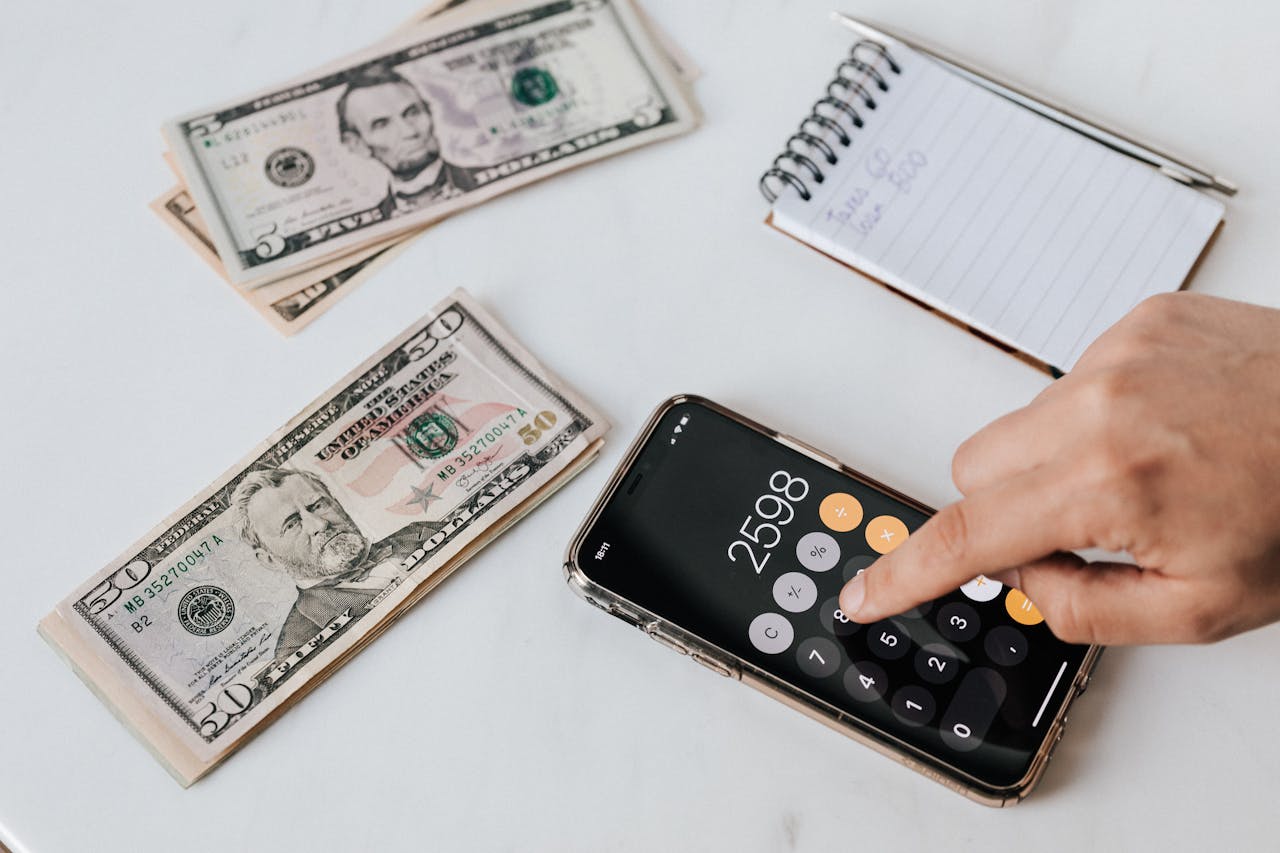

If you’ve ever watched your account drain to nothing the week rent comes due, you know the problem the half payment method is trying to solve. Most fixed bills are billed monthly, but most paychecks aren’t. That timing mismatch is what creates the mid-month cash crunch — even when the math, on paper, says you can afford everything. According to The Penny Hoarder’s State of Savings survey, 62% of Americans live paycheck to paycheck. And for many, the biggest culprit isn’t total spending but timing — one large bill landing on a single paycheck that can’t absorb it.
The half payment method tries to flatten that out. Instead of paying each bill in full when it’s due, you split the bill in half and set aside that half from each biweekly paycheck. By the time the bill comes around, the money is already there waiting in a holding account.
It’s not a budgeting method in the traditional sense; there are no spending categories or weekly trackers. It’s a cash-flow trick. And for biweekly earners, it can be the difference between a budget that works on paper and one that works in practice.
We’ll answer all of these questions and more below: How the method works, what it looks like across a full month, who benefits most and how to set up a simple template you can reuse every paycheck.
What Is the Half Payment Method?

The half payment method is a cash-flow strategy where you split each fixed monthly bill in half and pay one half from each biweekly paycheck. The goal is to keep large bills from landing entirely on a single paycheck.
Here is the core idea: most fixed bills like rent, car payments and insurance are due once a month. If you get paid every two weeks, those bills can wipe out a full paycheck, usually whichever one is closest to the due date. The half payment method evens out the load so each paycheck takes a smaller, predictable hit.
It is not the same as a category-based budget. The half payment method doesn’t tell you how to spend the rest of your money, it just changes the timing of how your fixed bills get funded.
How the Half Payment Method Works: Step-by-Step
To use the half payment method, you’ll list your fixed bills, divide each one in half and route that half from every paycheck into a holding account that pays the bills when they come due. The five steps look like this:
- List every fixed monthly bill. Include rent or mortgage, utilities, car payment, car insurance, internet, phone, streaming subscriptions, gym membership and any other recurring fixed-amount bills.
- Divide each bill by two. The result is what you’ll set aside from every biweekly paycheck.
- Open a separate “holding” or “bills” account. A free or low-fee checking or high-yield savings account works well. Keeping it separate prevents accidental spending.
- Set up automatic transfers on payday. From each paycheck, move the total half-bill amount to your holding account before any other spending happens.
- Pay bills in full from the holding account when they’re due. The money is already sitting there, so you’re never scrambling to cover a large fixed bill from a single paycheck.
If you’d rather automate the tracking, most budgeting apps can split bills across paychecks and notify you when a transfer should happen.
Half Payment Method Example (Full Month)
Here is what the half payment method looks like for a household with $5,000 in monthly take-home pay with two $2,500 biweekly paychecks.
Half Payment Method Example
| Monthly Bill | Full Amount | Half (Per Paycheck) | Notes |
|---|---|---|---|
Rent/Mortgage |
$1,400 |
$700 |
Largest fixed bill — save in holding account |
Car Payment |
$350 |
$175 |
Save in holding account |
Car Insurance |
$120 |
$60 |
Save in holding account |
Internet |
$80 |
$40 |
Save in holding account |
Phone |
$80 |
$40 |
Save in holding account |
Streaming Services |
$40 |
$20 |
Save in holding account |
Gym Membership |
$30 |
$15 |
Save in holding account |
Total per paycheck into holding |
— |
$1,050 |
Transfer this from each $2,500 paycheck |
Across two paychecks, $2,100 ends up in the holding account, exactly enough to cover the $2,100 in monthly fixed bills. The remaining $2,900 stays in your regular checking account for variable spending like groceries, gas and anything else that isn’t a fixed monthly bill.
Just remember, in this example, numbers are illustrative, not benchmarks. Your bills, paycheck size and timing will look different. And if a bill changes mid-year (a rent increase, a new streaming service), you’ll want to update the per-paycheck transfer the next pay cycle so the math keeps working.
Half Payment Method Template / Calculator
A printed half payment template makes the system stick. List your fixed bills in the first section, divide each by two, and you’ve got a per-paycheck transfer plan ready to go.
Include the following:
- A row for every fixed monthly bill (not variable expenses like groceries).
- A column for the full monthly amount.
- A column for half the amount, what gets transferred each paycheck.
- A total row showing the per-paycheck transfer to your holding account.
- A line for the date and amount of each paycheck so you can match transfers to deposits.
Half Payment Method for Biweekly Pay
The half payment method works best with biweekly paychecks because the math is built around two equal pay periods per month. If you get paid every two weeks, you’ll have 26 paychecks a year, exactly two extra paychecks beyond what the half-payment system needs each month.
Those two extra paychecks each year are quiet bonuses. Many people use them to fund irregular expenses like annual insurance premiums, holiday spending or a vacation, instead of letting the money disappear into regular spending.
Here are a few practical tips for biweekly earners:
- Map your bill due dates to your paycheck calendar. If rent is due on the 1st and you get paid on the 15th, the holding account is what bridges the gap.
- Use the two extra paychecks per year strategically. They are ideal for sinking-fund-style irregular expenses.
- Set transfers for the same day every payday. Consistency matters more than the exact day.
Pairing the half payment method with sinking funds for irregular expenses (car repairs, annual subscriptions, holiday gifts) tends to be the cleanest setup. The half-payment system covers your fixed monthly bills; sinking funds cover the once-or-twice-a-year stuff.
Half Payment Method Pros and Cons
The half payment method’s biggest strength is smoothing out cash flow, but the trade-off is the discipline required to leave the holding account alone.
Pros
- Eliminates the mid-month cash crunch caused by fixed bills landing on one paycheck.
- Pairs naturally with biweekly paychecks. There's no math required after the initial setup.
- Simpler than category-based budgeting because it only addresses fixed bills.
- Two extra biweekly paychecks per year become "found money" for irregular expenses.
Cons
- Requires discipline to not dip into the holding account between bill due dates.
- Works best with stable, predictable bills — variable bills (utilities, credit cards) need a buffer or rounding up.
- Initial setup takes some time: listing bills, opening a separate account and configuring transfers.
- Doesn't address discretionary spending. You'll still need a method for groceries, gas and other variable costs.
If you want a method that covers every dollar in a budget — including variable spending — zero-based budgeting is a more comprehensive option that can be layered on top of the half payment method.
Who Is the Half Payment Method Best For?
The half payment method tends to work best for biweekly paycheck earners with predictable fixed bills who feel cash-strapped mid-month.
It’s best for:
- Biweekly earners whose paycheck timing doesn’t align with bill due dates.
- People with steady, predictable fixed expenses (rent, insurance, subscriptions) and few large surprise bills.
- Anyone who wants simpler cash-flow management without committing to a full categorical budget.
- Households where one large bill — usually rent — is wiping out a single paycheck.
It’s less ideal for:
- Workers paid weekly, monthly or on irregular schedules. The math has to be reworked.
- Self-employed people with highly variable income.
- Anyone whose biggest budgeting challenge is variable spending, not fixed-bill timing.
If you’re deciding between cash-flow methods and categorical budgets, our overview of budgeting methods walks through the most common approaches side by side.
Frequently Asked Questions
The half payment method is a cash-flow budgeting strategy where you split each fixed monthly bill in half and pay one half from each biweekly paycheck. The goal is to prevent any single paycheck from being wiped out by a large monthly bill.
With biweekly paychecks, you transfer the half-bill amount from each of your two monthly paychecks into a separate holding account. By the time the bill is due, the full amount is already sitting in that account ready to pay. The two extra biweekly paychecks per year (26 total) can be used for irregular expenses or savings.
A separate account is highly recommended but not strictly required. Keeping the half-bill transfers in a dedicated checking or high-yield savings account makes it harder to accidentally spend the money before the bills are due. Some people use a labeled subaccount or savings bucket within the same bank instead.
The half payment method works best for fixed, predictable monthly bills like rent or mortgage, car payments, car insurance, internet, phone and recurring subscriptions. It doesn’t work well for variable bills like utilities or credit cards, although you can round up to a typical amount and adjust as needed.
No. The envelope method assigns specific cash amounts to spending categories like groceries, gas and entertainment to control discretionary spending. The half payment method only addresses the timing of fixed bills, not how you spend on variable categories. The two systems can be used together.
Yes. Most budgeting apps that support custom categories and scheduled transfers can be set up to mirror the half payment method. You typically create a “holding” or “bills” subaccount, schedule transfers from each paycheck and label each fixed bill so the app can match expected outflows to upcoming due dates.
If your paychecks vary, the half payment method still works — but you’ll need to leave a small buffer in the holding account or temporarily transfer extra from a higher paycheck to cover the gap on a lower one. People with highly variable income often use a percentage-based version: transferring a fixed share of each paycheck instead of a flat dollar amount.
Final Verdict
The half payment method is a simple, effective fix for one of the most common budget headaches: a single rent or mortgage payment wiping out a single paycheck. It works best for biweekly earners with steady fixed bills, and it pairs well with other budgeting methods rather than replacing them.
Realistically, the system depends on consistency more than complexity. If you can leave the holding account alone between bill due dates, you’ve already done the hard part. If discipline is the issue, a separate account and automatic transfers solve most of the problem.
Set it up once, automate the transfers, and the mid-month crunch tends to fade quietly into the background.