State of Retirement 2026: A Quarter of Prime-Age Working Americans Save Nothing for Retirement

More than 1 in 5 Americans in their prime working age have nothing saved for retirement. That’s according to The Penny Hoarder’s 2026 State of Retirement Report, which found that the median amount saved is less than $37,000.
The Penny Hoarder’s Pollfish survey asked 1,000 U.S. adults between the ages of 30 and 60 about their retirement planning. Among the survey’s findings:
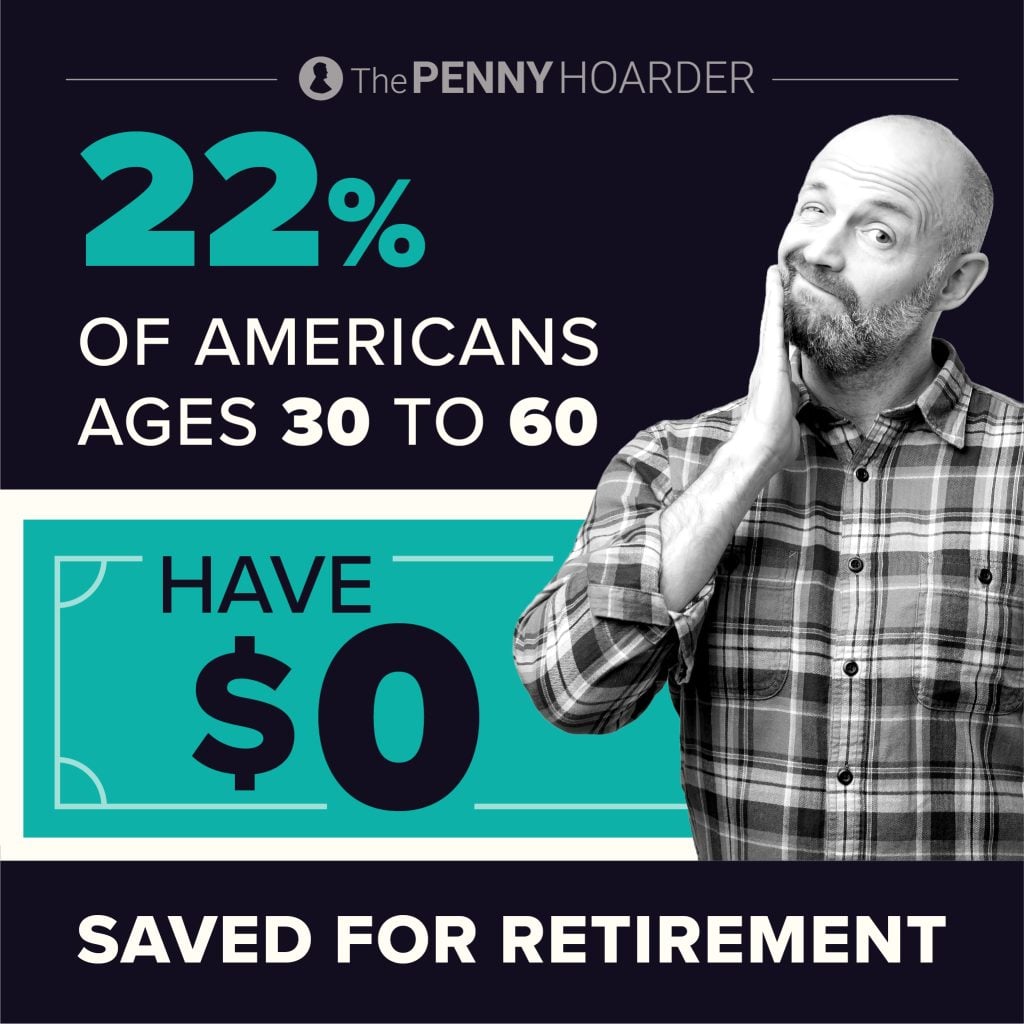
- 22% of U.S. adults between the ages of 30 and 60 say they have $0 saved for retirement. And 24% currently put nothing from their income toward retirement.
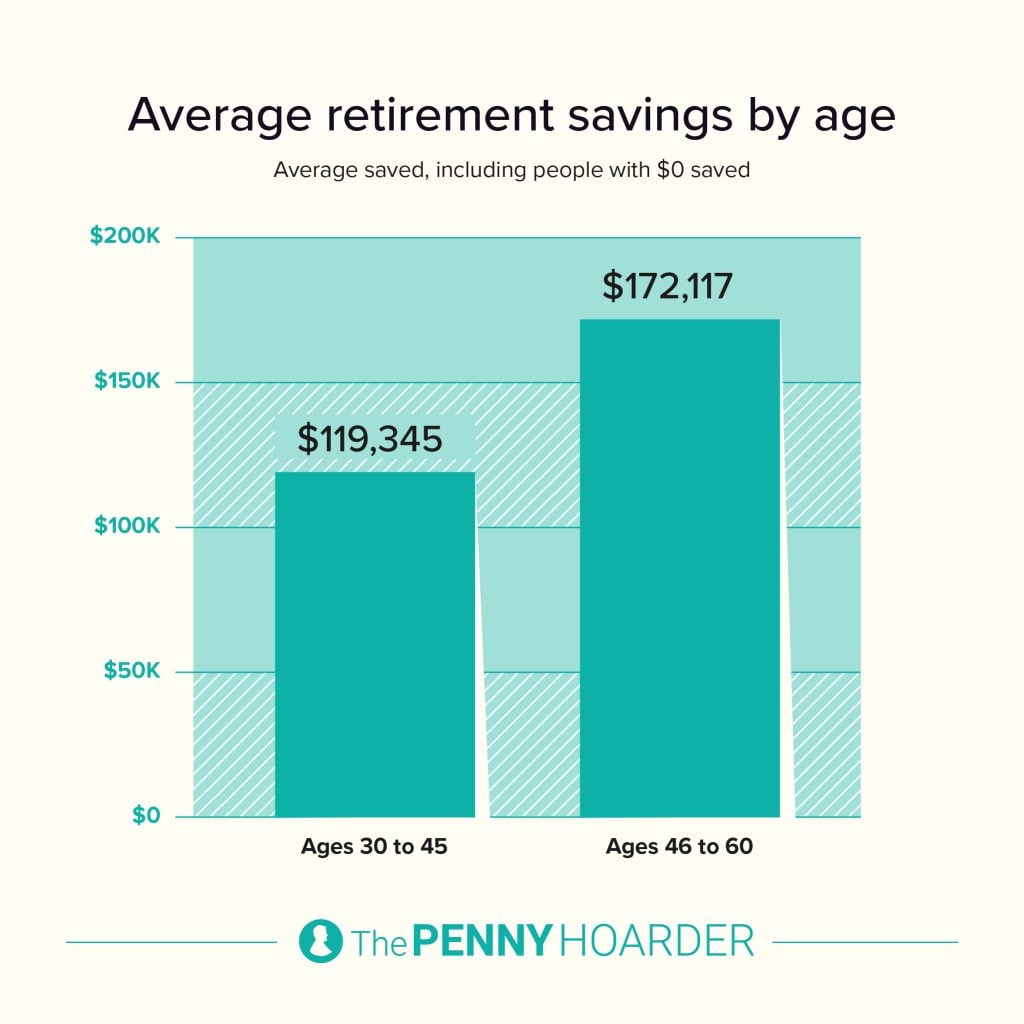
- The median amount saved is $36,708. The average amount saved (including those with $0) is $147,159, but that number likely skews higher because of a small percentage of ultra-wealthy households raising the average.
- 28% reduced or paused retirement contributions in the past year to pay for current living expenses.
- More than a third of adults (36%) have taken an early withdrawal or loan from a retirement account. Younger adults (ages 30 to 45) are significantly more likely to tap funds early than older adults (41% vs. 31%).
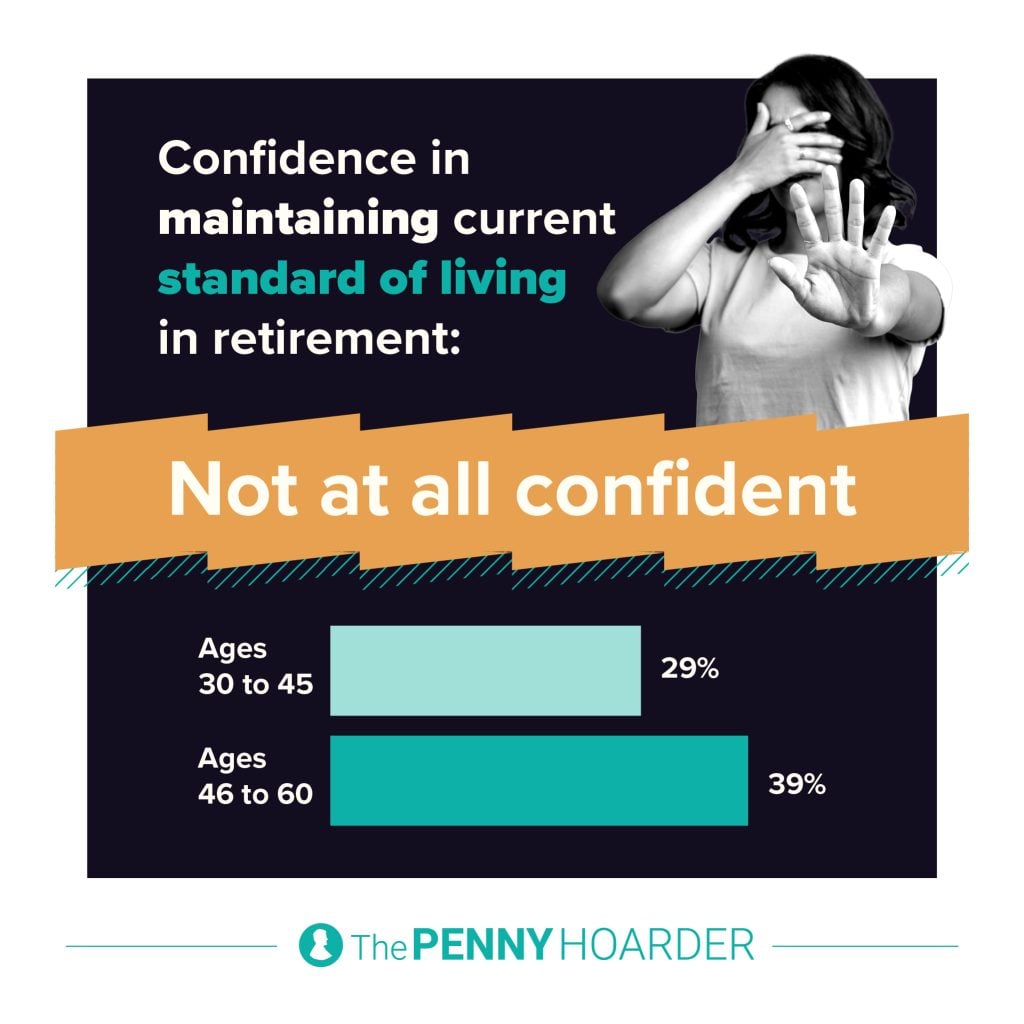
- Only 11% of respondents feel extremely confident they can maintain their standard of living in retirement, while 34% feel not at all confident.
- 52% expect to work past traditional retirement age.
- 28% cite the rising cost of living as their biggest retirement worry.
We’ll dive into how saving for retirement differs between Gen X and Millennials and who may be better prepared. And if you’re among those feeling like your nest egg is not ready for your golden years, we’ll share tips for stepping up your retirement planning, even if you’re living paycheck to paycheck.
The Average Retirement Nest Egg
More than half of prime working-age Americans have less than $50,000 saved for retirement, according to the survey.
Perhaps surprisingly, the older cohort of those age 46 to 60 are slightly more likely to have $0 saved (23% vs. 22%). However, this age group is also more likely to have a pension (17% vs. 11%), which could leave them thinking their retirement is covered. But most experts say you shouldn’t rely solely on any single source — including Social Security — to cover retirement expenses. Investing in an IRA and your company’s 401(k) are ways to diversify your retirement savings options.
On average, those ages 30 to 60 have $147,159 when you include the $0 savers and $189,328 if you exclude the $0 savers. But those numbers likely hide the actual amount most people have saved, because those with more than a million dollars saved (4%) may have an outsized impact on the average. The median amount saved, $36,708, is the amount that’s in the middle and likely closer to the typical savings.
How Much of Their Income Are People Saving for Retirement?
In a perfect world, all Americans are setting aside enough of their paycheck to have a relatively comfortable retirement. Overall, our respondents are saving an average of about 7% of their income.
Unfortunately, nearly a quarter of survey respondents (24%) said they are saving nothing. That percentage grew to 27% for Gen Xers (ages 46-60) and was 21% for Millennials (ages 30-45).
For those who are building a nest egg:
- 23% save 1% to 5%
- 20% save 6% to 10%
- 15% save 11% to 15%
- 7% save 16% to 20%
- 6% save more than 20%
It’s no surprise workers can’t add to their retirement accounts when they also struggle to build an emergency fund. Our 2026 State of Savings survey revealed that 44% of Americans can’t pay for a $1,000 emergency. So, saving the 10% to 20% of pre-tax income that experts recommend to fund a post-career life is likely far out of reach for most.
If saving money is tough because your budget is stretched thin, our guide on how to save money can help you get started.
Where Savers Keep Their Cash
Those who are saving listed several places where they park their retirement savings. Employer-sponsored plans — 401(k), 403(b) and 457(b) — reign as the most popular, with nearly 60% of respondents reporting they have at least one. That’s followed by 22% who have certificates of deposit (CDs) or savings accounts. As for individual retirement accounts, 20% have a Roth IRA and 17% have a traditional IRA. Only 14% of respondents have a pension.
Across age groups, however, around a quarter said they don’t have any of these retirement savings vehicles. That puts these workers behind the curve when it comes to growing retirement savings. For example, employers often match employee contributions to a 401(k) up to a certain percentage — essentially free money. You can open IRAs independently of your employer, or in addition to your employer-sponsored plan, and offer additional investment options to help grow your money over time. CDs and high-yield savings accounts allow you to earn modest but dependable interest on your savings without the risks of investing.
This is why successfully building a retirement fund has layers. Saving money is only one step. Putting it in an account that allows that nest egg to grow is crucial to having enough money to cover costs once you’re on a fixed income.
The Biggest Retirement Worries
More than a quarter of respondents said the rising cost of living was their biggest concern when it comes to retirement. Amid rising inflation, that echoes what we’ve heard in our 2026 Financial Anxiety Barometer Report — 65% said the cost of essential living expenses is their biggest source of financial anxiety.
Among our retirement survey respondents, here’s a breakdown of the three biggest retirement worries:
- Rising cost of living (28%)
- Outliving my savings (16%)
- Health care costs (14%)
Among all survey respondents, 34% said they were “not at all confident” they could maintain their standard of living in retirement, including nearly 4 in 10 (39%) in the 46-60 age group. Those ages 30 to 45 were slightly more confident, at 29%. Only 11% of all respondents were “extremely confident.”
Finding ways to save today on everyday expenses like groceries and car insurance can free up some money that you can put toward your retirement fund to cover future costs. And if you’re enrolled in a high-deductible health care plan, try to maximize your contributions to your Health Savings Account. The account is yours even after you leave your job, and you can withdraw money from the account tax free to pay for medical expenses, including Medicare premiums.
Early Withdrawals and Cutting Contributions
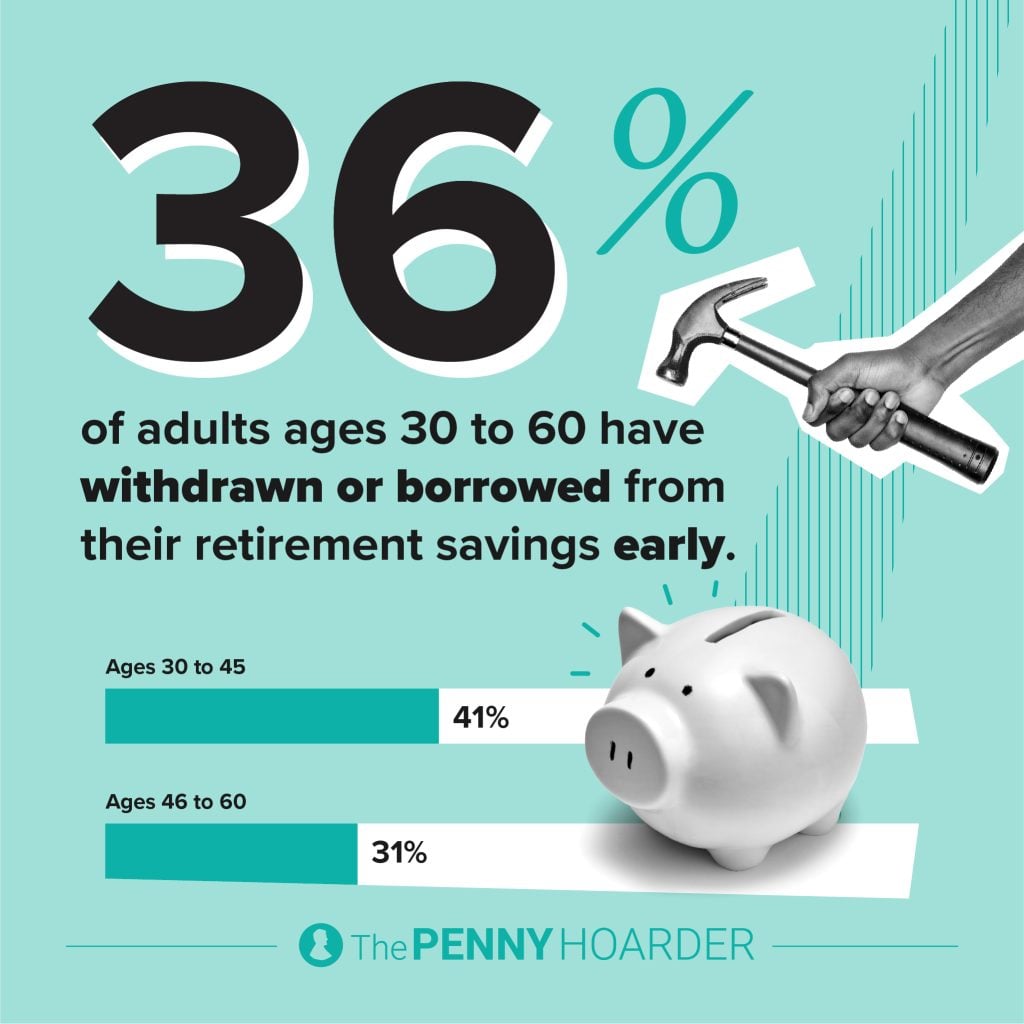
Of those who have retirement accounts, 36% have withdrawn or borrowed early, including 41% of those ages 30 to 45 vs. 31% among those ages 46 to 60.
If you’re struggling to cover everyday living or a bigger expense, borrowing from your retirement account may feel like your only option. Keep in mind that which account you tap can make a big difference in terms of how much it costs you. Among your options:
- 401(k). You can borrow from your 401(k) under certain circumstances, but you’ll have to repay the amount with interest. If you leave your job for any reason, you’ll have to pay it back in full when you file your tax return for the year. Otherwise, it will be treated as an early distribution, which means you get hit with taxes and the 10% penalty.
- Traditional IRA. You’ll owe income taxes plus a 10% penalty if you withdraw money from your traditional IRA before age 59-½ in most circumstances. Exceptions for the penalty exist for things like first-time home buyers and higher education expenses, but you’ll still have to pay income taxes on the withdrawal.
- Roth IRA. You have the most flexibility with your Roth IRA contributions. You can withdraw any money you’ve contributed to a Roth IRA at any time without paying a penalty or taxes (you already paid taxes on the money you put in the account). But you’ll owe taxes plus a 10% penalty if you withdraw any earnings before 59-½.
- Savings accounts. If you’re stashing any retirement money in a savings account, this is your best source to tap for money in an emergency. You likely won’t pay taxes or penalties for any withdrawals. But keep in mind: you are taking money from your future self.
People have also scaled back or stopped saving completely to get by. More than a quarter of respondents (28%) say they reduced or stopped contributions to their retirement account in the past 12 months — another 16% say they weren’t contributing to begin with.
Ask the financial experts, and they’ll tell you to contribute regularly to your retirement savings because you’ll benefit the most by letting compound interest and time grow your nest egg. That may be good advice, but finding extra money to put toward retiring “some day” is tough when you’re trying to come up with enough money for this month’s rent or groceries.
Pay Off Debt vs. Save for Retirement
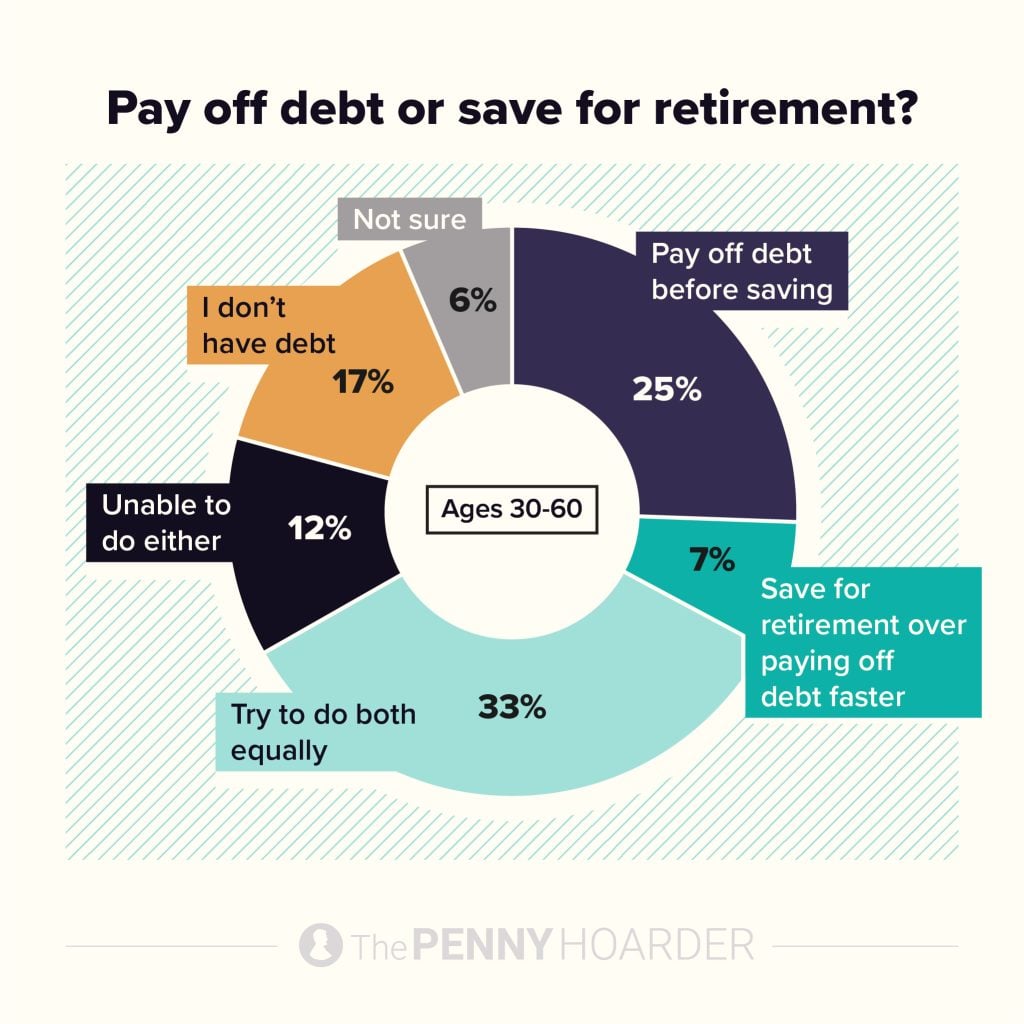
Carrying debt can have multiple financial consequences that affect you in the present, while retirement feels far in the future for many workers. That’s driving 25% of respondents to prioritize paying down debt over saving for retirement, while only 7% are focusing on retirement savings over debt payments. Other respondents said:
- They are trying to do both equally (33%)
- They can’t do either (12%)
More Gen Xers than Millennials (35% vs. 31%) are attempting the balancing act of doing both. But when it comes to the inability to do either, 46-60 year olds topped 30-45 year olds there as well (14% vs. 11%).
This illustrates how the debt problem is holding Americans back in more ways than monthly payments and low credit scores. It’s affecting their ability to set aside money. This lines up with the findings of our State of Debt survey, where 23% of respondents said they’ve delayed saving for retirement because of debt.
Paying off debt is important — so how do you know whether to prioritize that or saving? Here’s how to find out.
Working in Retirement
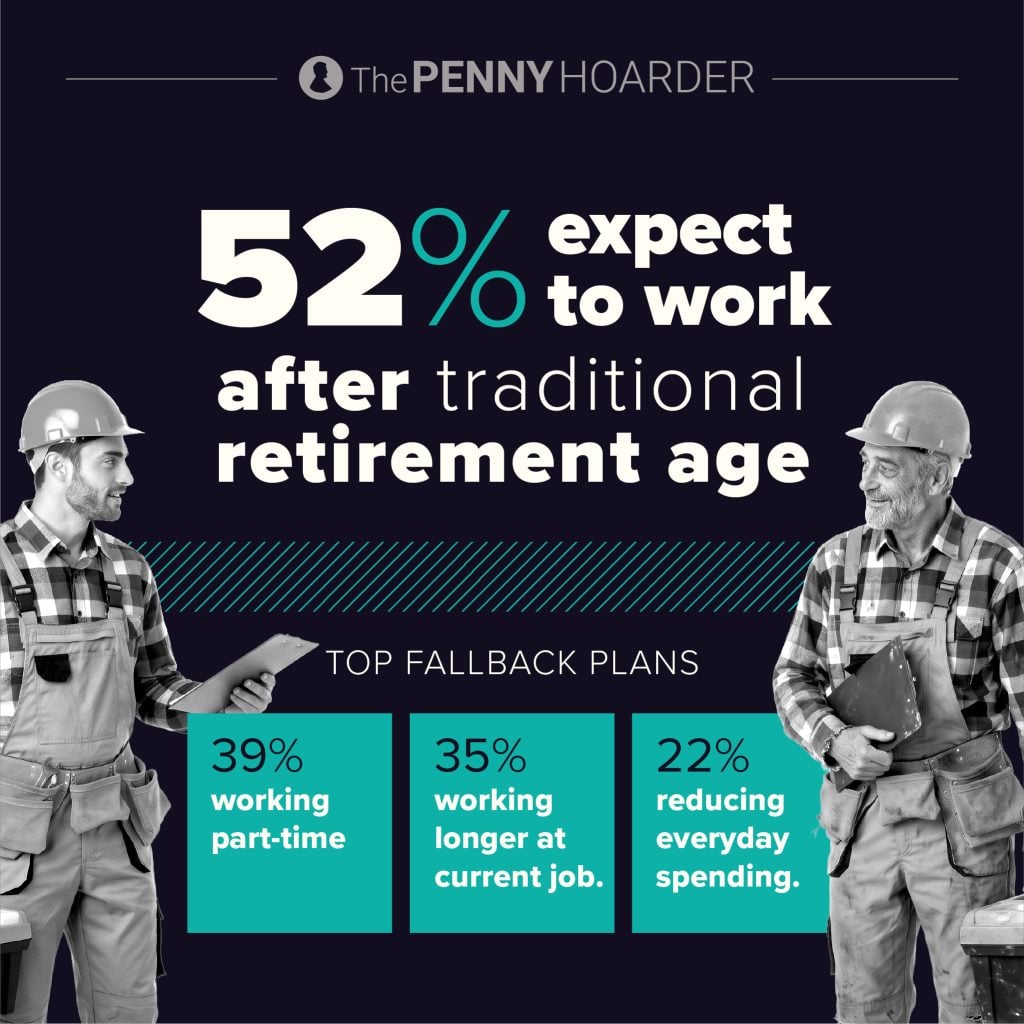
Few people may dream of working in retirement, but many expect to do just that. More than half of Americans (52%) anticipate doing so, and only 11% think they definitely won’t.
Working part time after retiring is also the No. 1 back up plan for workers if their savings come up short. Nearly 40% said they’d pick up part-time work, followed by 35% who said they’d work longer in their current job and 22% who said they would cut down their spending. Only 16% would downsize their home, and 14% would move somewhere cheaper.
The good news is, there are more benefits than extra income when it comes to working longer, such as building community and keeping your mind sharp. You can even work while collecting Social Security benefits.
However, the best step you can take for your retirement is to start saving now and setting that money aside somewhere it can grow. If saving for retirement has become overwhelming, we have a guide to get you started at any age.
The Penny Hoarder Managing Editor Katie Sartoris, Senior Managing Editor Tiffany Wendeln Connors and Senior Editor of Freelance Mackenzie Raetz are Certified Educators in Personal Finance.
Methodology
To gather data for the Retirement Survey 2026, The Penny Hoarder surveyed 1,000 U.S. adults ages 30 to 60 using Pollfish on October 8, 2026. The survey asked respondents about their retirement savings, account types, early withdrawals, debt, confidence levels, expected retirement age, Social Security expectations, and fallback plans.